 English





 English


Biden administration dismisses Cheniere's attempt to bypass LNG pollution rule

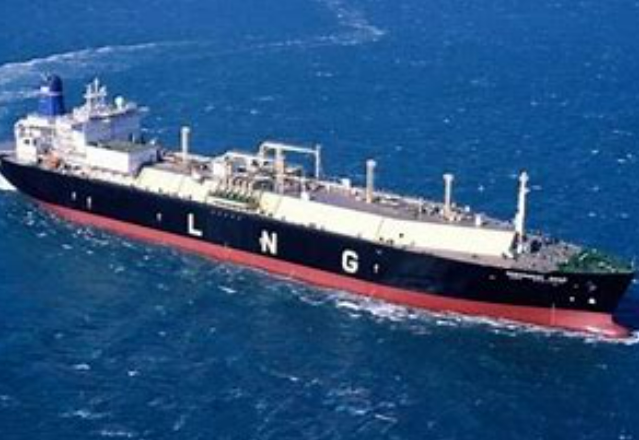
The U.S. Environmental Protection Agency (EPA) announced on Tuesday that it has refused a request from Cheniere Energy (NYSE:LNG) Inc, a large exporter of liquefied natural gas (LNG), to exempt turbines at its two U.S. Gulf Coast terminals from a hazardous pollutant rule.
The denial raises questions as to whether the Texas-based company will be required to reduce exports of the supercooled fuel in order to install new pollution control equipment at its facilities, at a time when Europe relies on increased shipments of LNG from the United States to compensate for Russian reductions.
Europe is experiencing its worst-ever gas supply crisis, with energy prices increasing and German importers debating the possibility of rationing in the European Union's largest economy as a result of Russia's reduction of gas shipments to the west. Moscow cited a pipeline malfunction as the reason for the halt, but Europe views it as evident retaliation for sanctions imposed by the West on Russia for its invasion of Ukraine.
"Although EPA is refusing Cheniere's request for a special subcategory to comply with the turbines rule, the Agency will continue to engage with them and other industries to ensure they satisfy Clean Air Act obligations," stated EPA spokesperson Tim Carroll in an email.
Gas turbine owners and operators had until September 5 to comply with the National Emission Standards for Hazardous Air Pollutants (NESHAP), which President Joe Biden's administration implemented after an 18-year delay.
The regulation limits emissions of recognized carcinogens such as formaldehyde and benzene from stationary combustion turbines, such as those utilized by LNG facilities.
Cheniere had asked the Biden administration to exempt a specific type of turbine installed at its LNG terminals from the NESHAP limits, arguing that they would reduce shipments from the leading U.S. exporter for an extended period of time and jeopardize the country's efforts to increase supplies to Europe.
According to the EPA, Cheniere was the only corporation to obtain such an exception. The company claimed that the turbine model it uses at its Texas and Louisiana facilities is the best technology for withstanding the types of storms that frequently strike the Gulf Coast, but that the equipment is extremely difficult to retrofit, and that engineering and installation of pollution controls could take years.
Eben Burnham-Snyder, a spokeswoman for Cheniere, stated that although the firm "strongly disagrees" with the EPA's decision, "we will work with our state and federal regulators to establish solutions to assure compliance."
He stated that the choice may result in "unwarranted expenditures," but that coming into full compliance will not have a major financial or operational impact and will not hinder the company's capacity to provide LNG to customers and governments worldwide.
Methane, the primary component of natural gas, undergoes a chemical transition when it is superheated, which results in the emission of formaldehyde and other hazardous pollutants.
According to an EPA list, around 250 gas turbines in the United States are subject to the new rule, with nearly a quarter of them belonging to Cheniere.
The Houston-based corporation is responsible for around fifty percent of U.S. LNG exports.
Ilan Levin, associate director of the Environmental Integrity Project, stated that EPA's decision to deny Cheniere's request was not unexpected because the agency had told the company for years that it needed to comply with the standard.
Reuters reported last month that the EPA has questioned Cheniere's 2011 and 2013 selection of gas turbines without emission controls.
He stated, "We congratulate the EPA for implementing the law and ensuring that residents of the coastal bend and southeast Texas/southwest Louisiana have the same clean air safeguards as everyone else."
Tuesday's closing price of $158.58 for Cheniere shares was a decrease of 2.3% compared to Monday's closing price of $159.05.


Risk Warning: Trading financial instruments involves significant risk and may result in the loss of your invested capital. Please ensure you fully understand the risks and seek independent professional advice if necessary. This article does not constitute investment advice or a trading recommendation. Past performance is not indicative of future results.
Bonus rebate to help investors grow in the trading world!


