 English





 English


Oil prices stay stable as $80 Brent remains elusive; US inventories are in focus

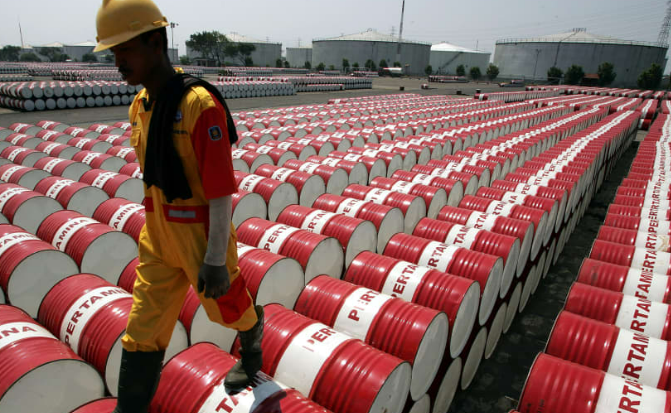
Oil prices remained in a tight range in Asian trade on Wednesday, as confusing indications on global supply and demand as Brent struggle to break above critical levels, while U.S. inventory data also supplied conflicting signals.
Some US oil production capacity has resumed after being disrupted by cold weather, and output at Libya's largest oilfield restarted earlier this week. This was backed by data indicating an increase in Norwegian crude output.
While the trend indicated increasing oil supplies in the short term, it was slightly countered by ongoing concerns about an intensifying conflict in the Middle East. The Israel-Hamas conflict went on, as US and UK forces continued to combat with Houthis in Yemen and the Red Sea.
These opposing signals caused crude prices to establish a tight trading range this week, while also preventing Brent prices from breaking over the $80 per barrel mark.
Brent oil futures expiring in March were steady at $79.60 per barrel, while West Texas Intermediate crude futures were unchanged at $74.32 per barrel by 20:09 ET (01:09 GMT).
Both contracts had a slow start to 2024, with continuing concerns that slowing economic growth this year will drag on oil demand. Oil prices are expected to fall by more than 10% in 2023 because to fears about less tight markets and declining demand.
Weak data from China, the world's largest oil importer, was a key source of concern for crude markets, as the country reported lower-than-expected GDP results in the fourth quarter.
The focus is now on a slew of purchasing managers index readings from major economies, which are coming this week, to determine the status of economic activity in January.
The fourth quarter GDP data for the United States is also due on Thursday, while the PCE price index data, the Federal Reserve's preferred inflation gauge, is due on Friday.
The dollar's strength, combined with mounting expectations on higher-for-longer US interest rates, increased pressure on oil markets.
US inventories create more mixed cues - API
The American Petroleum Institute said that oil stockpiles in the United States fell by 6.7 million barrels in the week ending January 19, as extreme cold weather hindered production across much of the country.
However, the API data showed a steady increase in gasoline inventories and a little decrease in distillate stockpiles, showing that demand in the world's top fuel consumer remained weak as cold weather impeded travel in the country.
Gasoline stockpiles in the United States have increased significantly each week in 2024, showing a sharp drop in fuel consumption as travel conditions deteriorated. U.S. gasoline futures remained at two-year lows.
The API results often signal a similar reading from official inventory data, which is due later on Wednesday. Analysts predict a 3 million barrel drop in oil inventories, but gasoline stockpiles are anticipated to rise by 2.2 million.


Risk Warning: Trading financial instruments involves significant risk and may result in the loss of your invested capital. Please ensure you fully understand the risks and seek independent professional advice if necessary. This article does not constitute investment advice or a trading recommendation. Past performance is not indicative of future results.
Bonus rebate to help investors grow in the trading world!


