English




Boeing Stock Jumps 4% on Singapore Airlines, Qantas Order Talks and 737 Ramp Plans

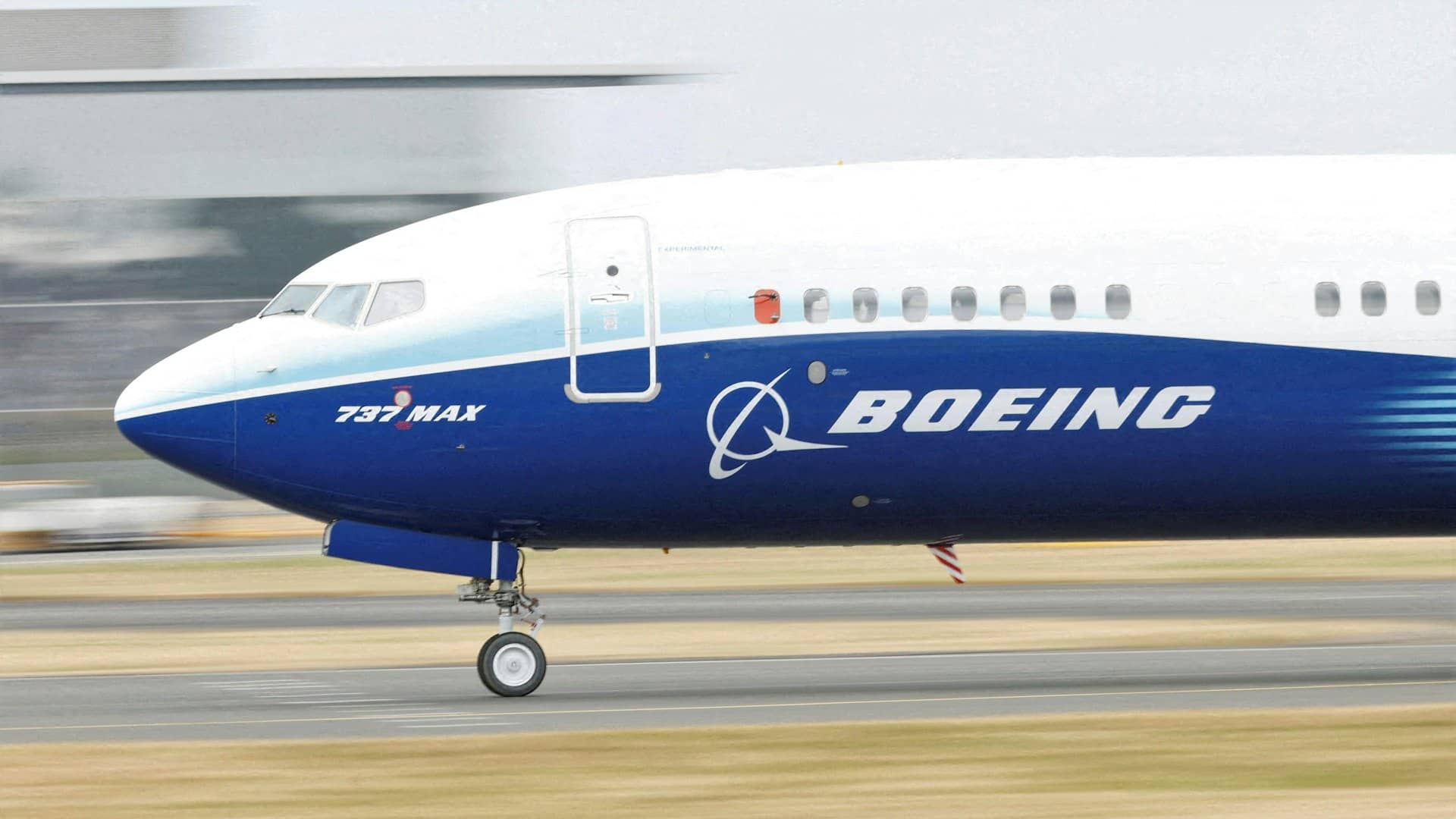
Boeing (NYSE: BA) shares climbed roughly 4% on Thursday, driven by two distinct but complementary catalysts that, together, paint a picture of a company executing its recovery strategy faster than consensus had assumed.
The first is that Reuters reported that Singapore Airlines and Qantas Airways are each in talks with Boeing and Airbus to buy large numbers of wide-body planes. If the deals go through, they will set the fleet strategies for both airlines for the next ten years and cost billions of dollars.
The second: The Air Current said that Boeing is internally looking into whether it could finally increase 737 production beyond 70 planes per month. This would be close to Airbus's output goals and a lot more than Boeing's public near-term ceiling of 63 planes per month.
Both changes are in their early stages. Neither is certain. Even so, the stock went up 4% because both signs point to a recovery story that has been building since 2026, and investors who have been waiting for Boeing to get back on track with business are seeing more and more proof.
Singapore Airlines: 50 Wide-Body Jets, with Options for More
Reuters cited industry sources who said that Singapore Airlines is in early talks with both Boeing and Airbus to buy at least 50 wide-body commercial planes. The purchase is seen as the start of Singapore Airlines' next big growth phase, which will happen in the next ten years. This isn't a talk about a quick delivery, but about a long-term strategic commitment that will lock in the fleet composition for years to come.
Both the Boeing 777X (the world's biggest twin-engine passenger jet, with room for about 400 people) and the Airbus A350-1000 (a slightly smaller competitor in the wide-body market) are being looked at. The possible framework could also include options to buy dozens more planes besides the first 50. This means that the overall commercial value could be much higher than what the base order suggests.
Singapore Airlines declining to comment and both Boeing and Airbus representatives declining to comment is standard practice during active negotiations — neither confirming nor denying a deal that hasn't closed is the expected behavior. The Reuters sourcing through "industry sources" carries the credibility that comes with the publication's track record on aviation deal reporting.
What makes the Singapore Airlines potential order strategically meaningful for Boeing stock beyond the revenue: the 777X has had its own troubled certification timeline, having faced multiple delays alongside the 737 MAX variants.
A major flag carrier formally evaluating the 777X for a large fleet commitment signals that Singapore Airlines — one of the world's most operationally demanding and safety-focused carriers — is treating the program as a viable commercial option. That perception matters for a jet program that has needed to rebuild market confidence.
The broader commercial context: Singapore Airlines is explicitly moving counter to competitors who have scaled back capacity amid fuel cost uncertainty and economic headwinds.
A carrier making aggressive fleet investment commitments at a moment when others are cautious becomes a meaningful demand signal for aircraft manufacturers — and Boeing is well-positioned to capture that demand if its 777X certification proceeds on the timeline CEO Kelly Ortberg outlined in May.
Qantas: 20 Wide-Body Jets and a Fleet Modernization Strategy Already in Motion
Qantas Airways is evaluating a separate order for roughly 20 wide-body aircraft, Reuters reported, focused on either additional Boeing 787 Dreamliners or the primary variant of the Airbus A350. The potential purchase would extend Qantas's existing long-haul modernization strategy, which had already established firm orders and purchase rights for 24 wide-body jets to phase out older Airbus A330 and A380 fleets starting in fiscal year 2027.
A Qantas spokesperson confirmed to Reuters that the airline remains in "regular communication with aircraft manufacturers as a routine part of its fleet management strategy" — careful language that neither confirms nor denies the specific negotiation but acknowledges ongoing contact. That's a meaningful non-denial in aviation industry context.
The Qantas conversation is smaller in scale than Singapore Airlines but structurally important for a different reason: it confirms that the 787 Dreamliner remains commercially competitive for major long-haul operators despite Boeing's broader certification and production challenges.
The 787 has been one of Boeing's most complex manufacturing programs and has faced its own quality and delivery complications — continued orders from operators like Qantas validate the platform.
The 737 Production Target That Wasn't Supposed to Exist Yet
Separate from the wide-body order discussions, The Air Current reported Thursday that Boeing is internally exploring whether suppliers could support raising 737 output to approximately 70 aircraft per month — beyond the 63 per month that Boeing has publicly stated as its near-term target.
The sequencing matters here. Boeing is currently in the process of ramping from 42 to 47 aircraft per month following FAA clearance, with CEO Ortberg saying in May: "We're off and rolling at the 47 rate, and we should be there in the next couple months." The subsequent public target is 52 per month, followed eventually by 63. The Air Current report suggests internal planning is already modeling scenarios beyond 63 — closer to 70.
Boeing was careful in its response, referring back to Ortberg's Bernstein conference remarks without providing further detail. The company is not going to confirm a production target it hasn't formally adopted, particularly one that depends on supplier capability assessments still underway.
The strategic significance of 70 per month is the comparison it implies. Airbus has long targeted 75 A320neo-family jets per month but has repeatedly missed that goal due to supply chain constraints. It is currently producing approximately 60 narrowbody jets per month and expects to reach 70–75 by end of 2027, stabilizing at 75 thereafter.
A Boeing internal study targeting 70 per month — even as an aspirational planning scenario — signals that Boeing's recovery ambition now extends to genuinely competing with Airbus on production volume rather than simply recovering lost ground.
The risk is real: supply chain constraints have been the binding constraint on Boeing's production ramp already, and pushing toward 70 per month would require supplier performance at a level the aerospace supply chain has struggled to sustain.
The Air Current explicitly noted the studies are early-stage and "the higher cadence may not be adopted." But the fact that Boeing is running these scenarios internally tells you where management's ambition currently sits.
What the Combined Picture Says About Boeing's Recovery Trajectory
Individually, each Thursday development is meaningful but qualified. Singapore Airlines talks are early-stage. Qantas negotiations are unconfirmed beyond routine supplier contact. The 737 production study may not result in changed targets. None of these are completed facts.
Collectively, they describe a company where:
Commercial demand is rebuilding. Two of Asia-Pacific's most operationally rigorous carriers are evaluating Boeing products for major fleet commitments. Airlines don't enter multi-billion-dollar negotiations out of courtesy — they do it because the product and the manufacturer meet their operational standards.
Production ambition is expanding beyond stated targets. Internal planning that already extends to 70 per month — while current output is at 47 per month — reflects confidence that the ramp trajectory is sustainable and that the ceiling previously communicated isn't the ceiling management is internally planning toward.
The 777X program is attracting serious commercial interest. Singapore Airlines evaluating the 777X for a minimum 50-aircraft commitment is the kind of demand signal that aircraft programs need to justify continued development investment. It doesn't guarantee 777X certification proceeds on schedule, but it confirms market demand exists when it does.
The iShares Dow Jones US Aerospace & Defense ETF gained 3% on Thursday, providing the sector tailwind that supported Boeing's individual move. BA's 1.3% year-to-date gain remains modest relative to what the recovery narrative would imply if it fully executes — which is another way of saying the stock price still reflects significant uncertainty about whether the operational improvements are sustainable.
The Risk That Thursday's Rally Doesn't Change
Boeing's current production ramp from 42 to 47 per month is the immediate operational test. Ortberg's "off and rolling" language in May was encouraging; the FAA's authorization of the step-up was the formal clearance needed.
Whether Boeing executes that ramp cleanly — without quality incidents, supplier failures, or regulatory interventions that have characterized previous production step-ups — will determine whether the 52 per month target gets authorized next, and whether internal studies of 70 per month ever become external commitments.
The debt-to-equity ratio of 7.42 continues to constrain financial flexibility. Every month of clean production execution and successful deliveries reduces that constraint incrementally; any stumble extends the timeline to financial recovery. Wide-body order conversations with Singapore Airlines and Qantas contribute to the backlog that services that debt over time — but only when aircraft are delivered, not when negotiations are ongoing.
The 777X certification remains the wild card. Singapore Airlines evaluating the jet for a major order is a positive demand signal, but actual commercial deliveries — currently targeted for 2027 — require FAA approval that Boeing has been working toward through a flight test program with its own timeline risks. An order announcement without certification progress would be commercially premature.
Boeing stock at +4% on Thursday reflects a market that is rewarding the accumulation of positive signals — not yet pricing a fully recovered aerospace manufacturer, but acknowledging that the trajectory has improved materially from where consensus was twelve months ago.
Singapore Airlines evaluating 50+ wide-body jets, Qantas in discussions for 20 more, and Boeing internally modeling production rates beyond 70 per month collectively describe a company operating with more commercial confidence and production ambition than the stock's modest year-to-date gain fully credits.
The consensus price target of $259.80 versus Thursday's trading level — still implying meaningful upside — reflects a market that believes in the recovery but wants to see certification milestones, production ramp execution, and backlog conversion before fully pricing it.
Thursday gave investors three more reasons to believe the trajectory is real. The proof will be in the delivery records, literally, when 777X aircraft start landing at Singapore Airlines and 787s continue flowing to Qantas.


Bonus rebate to help investors grow in the trading world!