English




Bitcoin Price Hits $72K Amid Iran Peace Talks and CPI Fears

Bitcoin(BTC) jumped over $72,000 early Friday morning, bringing its weekly gains to over 7%. This happened as markets tried to make sense of mixed signs from the US-Iran ceasefire talks that are set to take place in Pakistan. But the rise came with a catch: the consumer price index report later today could quickly change how people feel if inflation stays higher than expected.
The way the prices are moving shows us something important about where crypto is at the moment. Now, geopolitics has a bigger impact on the direction of the Bitcoin price than it did in the past. This is different from the story that was controlled by macroeconomics from 2022 to 2023. At the same time that traders are looking at Middle Eastern policy, they are also waiting for Federal Reserve hints in inflation prints.
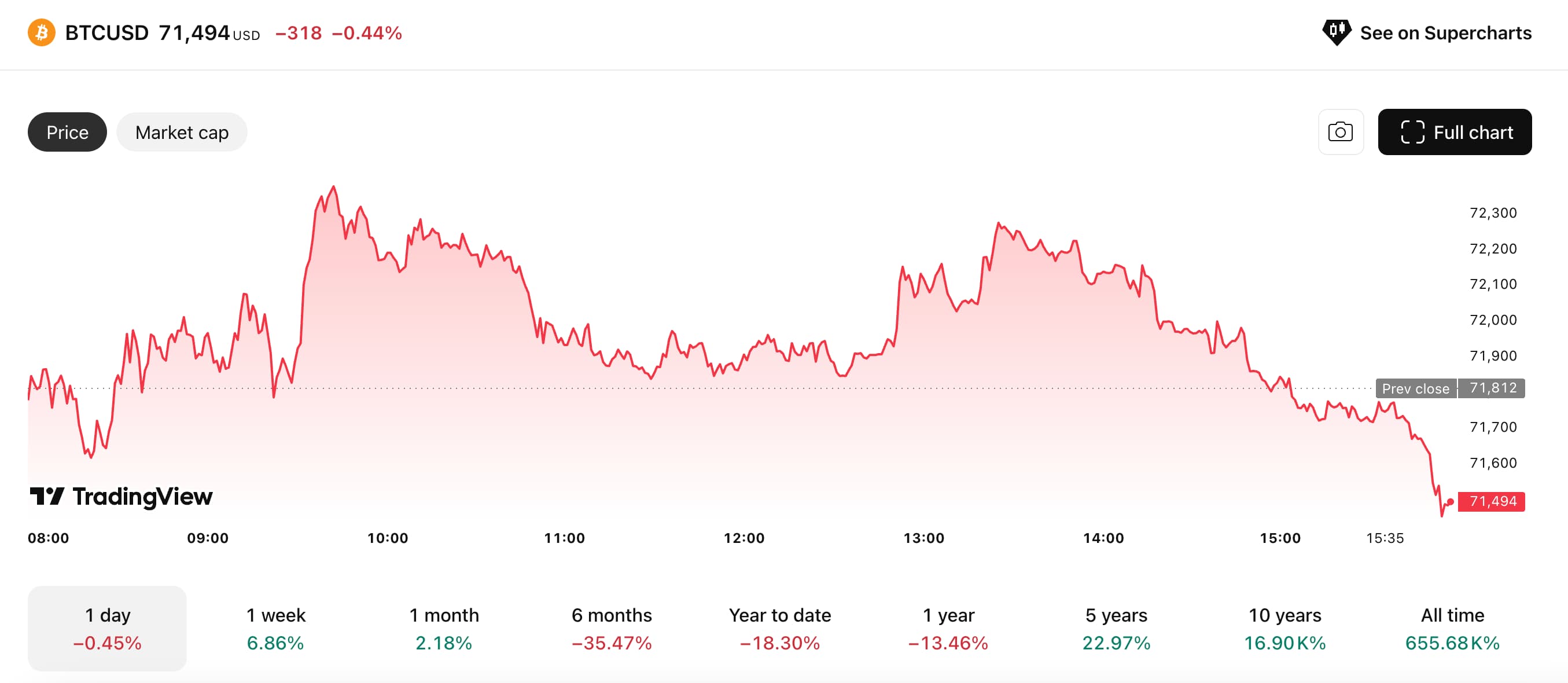
Bitcoin intraday price movement
The Catalyst: War Premiums Meet Regulatory Thaw
There are two things that caused Bitcoin to rise to $72,159 (up 1.6% in Friday's Asian session). First, cautious hope about a possible calmdown between Washington and Tehran made people more willing to take risks with speculative assets. The biggest cryptocurrency still trades well below its all-time high of $126,000 in October, but this week's rise suggests that investors are seeing how much political calm can support a long-term rise.
The second thing is that governmental tailwinds in the U.S. keep growing, albeit slowly. Speculation that the CLARITY Act is making progress in Congress has made some people cautiously optimistic about the crypto market, even though it's still not clear when the bill will be passed. Uncertainty is bad for markets, but government hostility is worse. Just the thought of simpler rules is enough to make volatility premiums go down.
Parsing the Pakistan Peace Talks: Theater or Turning Point?
It gets messy here. Tehran and Washington reportedly signed a "conditional ceasefire" this week. Within hours, Iran accused the U.S. and Israel of breaking accords and demanded Lebanon's involvement in any final agreement. Iranian official media denied their delegation had arrived in Pakistan, saying talks were halted until "sufficient assurances."
Hormuz Strait provides another layer. President Trump chastises Iran for slowing shipping in the vital waterway. Tehran proposed passage tolls, which Washington rejected. Iran has refused U.S. demands to stop uranium enrichment and remove nuclear installations.
For traders, BTC prices hope, not assurance. Expect $72K resistance to become a trap if discussions fail or drone strikes restart. Simon Massabni of XS.com said, "Geopolitical factors have now become a primary driver of Bitcoin's direction, a shift that was not as pronounced in previous market cycles." Expect range-bound chop rather than breakout momentum until clarity emerges.
The Inflation Wild Card: CPI Could Rewrite the Fed Script
The markets are getting ready for the March CPI numbers to drop later on Friday. As expected, headline inflation went up because of the war in the Middle East, which made oil and gas prices go up around the world. If prints are hotter than expected, it will kill chances for Fed rate cuts in the near future. This is a nightmare scenario for speculative assets like crypto that do well when rates are low.
The Fed's thinking is that if inflation rises again, Powell's team can't give a reason to ease. There is less liquidity. Bitcoin and other cryptocurrencies lose their big-picture lead. On the other hand, a weaker print leaves the chance of a rate cut in September alive, which could lead to another push toward resistance levels between $75K and $80K.
What's the joke? Costs of energy went up because of the chaos in geopolitics, and this now threatens the very monetary easing that could lower geopolitical risk premiums. Traders can't duck this feedback loop.
Risk Scenarios: What the Charts and Flows Are Signaling
Bullish case: talks in Pakistan lead to a framework deal, CPI is lower than expected, and BTC gets back $75K with certainty. Regulatory momentum speeds up changes made after the CLARITY Act. The October high would then become the next magnet, though the psychological pushback of $100,000 would probably make it hard to move for weeks.
Bearish case: The ceasefire falls apart, tensions between Iran and Israel rise, the CPI shows that prices are rising quickly, and the Fed suggests that it will remain "hawkish" for a while longer. The price of bitcoin falls back to the support area between $65K and $68K, wiping out the week's gains. When volatility goes up, it forces people to pay off their crypto futures debt, which destroys altcoins.
Base case: Talks move slowly forward without coming to a conclusion, inflation slows down a bit but not a lot, and Bitcoin stays between $70,000 and $74,000 for weeks. In the short term, this fits with Massabni's "range-bound to slightly bearish" view. Being patient becomes the job.
What This Means for Your Portfolio
A relief rally is not the same thing as structural power. Bitcoin's 7% weekly rise is not due to a core cause but to lessened tail risk. The asset is still very sensitive to news risk—a bad bargaining session in Islamabad could quickly wipe out days of gains.
Right now, position size is more important than direction bets. If you're long Bitcoin, you might want to cut your position when the price goes above $73K and re-deploy if the calm becomes clear. If you are not exposed enough, it makes sense to wait for post-CPI volatility to slow down before adding more.
Most importantly, changes in market value show that big players like banks are still not involved. Until there are steady flows into spot Bitcoin ETFs or big corporate treasury announcements, rallies should not be seen as the start of a new bull leg. Geopolitics can be used to tell interesting stories, but it's not a good way to build long-term trends.
The next 72 hours will show if BTC's rise above $72K is a real change or just another fake breakout in a pattern that has been going on for months.


Bonus rebate to help investors grow in the trading world!