English




Copper Tariff Trade Is Back as Comex Premium Hits $500 Over LME

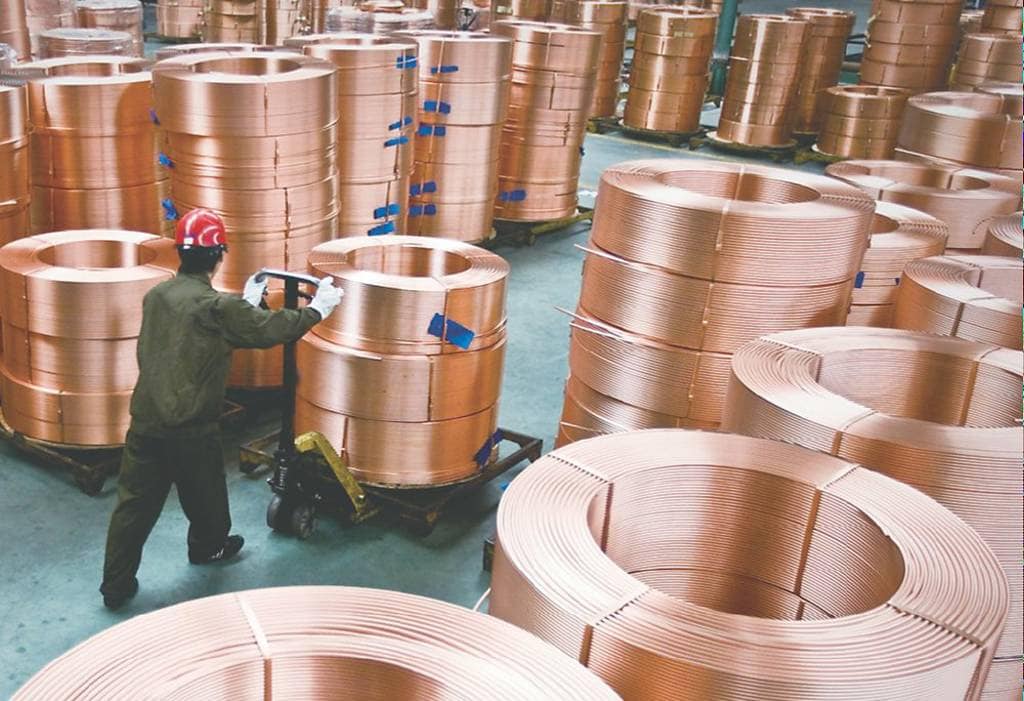
Copper is repeating one of last year's most disruptive moves. The premium between Comex (New York) and LME (London) copper contracts has widened back to more than $500 per ton, the largest spread since last autumn, as traders again direct every available ton to the US due to renewed speculation that the Trump administration will impose import tariffs on refined copper before a June 30 Commerce Department deadline.
A little déjà vu. Henry Van, Trafigura's industrial metals analysis head, said all tons are going to the US, as previous year. "It's very conceivable that we go back to imports of 200,000 tons a month in the near future."
How the Arbitrage Works — and Why It's Back
Trade structure is basic. Physical dealers can ship international copper to Comex warehouses and profit from the spread after shipping costs when Comex prices are higher than LME. For South American copper arriving at major U.S. ports, the premium must cover freight, insurance, and finance, currently $300–$400 per ton.
Given the spot premium of 3% of the LME price, spot delivery is marginally lucrative. The March 2027 forward premium, close to $1,000 per ton (7% of LME price), is more substantial. That forward premium represents market pricing in the Commerce Department's warned scenario of 15% tariffs from January 2027 and 30% from January 2028.
Traders focus on the June 30 deadline. If the Commerce Secretary's update allows levies to begin in January 2027, there would be a significant incentive to transport as much copper to the U.S. as possible in Q3 and Q4 2026, before tariffs take effect, while LME inventories fall down globally as metal migrates to Comex.
The Scale of U.S. Copper Accumulation
The numbers reveal how aggressively the market has already positioned. U.S. copper imports more than doubled year-on-year to 533,000 tons in Q1 2026, per World Bureau of Metal Statistics data. Comex stocks now total 577,385 tons — accounting for 44% of global exchange inventory. An additional 222,000 tons sit at U.S. ports in registered and off-warrant LME inventory, with 33,275 tons cancelled at New Orleans last week — a signal that metal is being prepared for customs clearance as the arbitrage widens further.
Including off-exchange storage, the U.S. has built a strategic copper reserve likely exceeding 1 million tons through the on-again, off-again tariff threat. This is larger than any country's reserves outside China's state stockpile manager.
Trafigura last week moved to withdraw hundreds of millions of dollars of copper from LME warehouses — the largest withdrawal orders the LME has seen since 2013 — at least partially to capture Comex premium prices. The move itself tightens LME availability and widens the spread further.
Why the Global Copper Market Is Structurally Bullish
The tariff arbitrage is amplifying an already constructive underlying market picture. Copper reached a record above $14,500 per ton in late January and is currently trading near $13,746 per ton in London — up approximately 43% over the past year. The rally reflects multiple structural demand drivers:
AI infrastructure buildout has become a significant copper demand driver — data centres, power transmission, and EV charging infrastructure all require substantial copper volumes. Investor positioning on Comex has risen to the most bullish since December 2020 as AI-adjacent commodity demand narratives gain traction.
China is back buying. Chinese buyers had stepped back from the market when prices rallied earlier this year, but have returned since the Chinese New Year holiday — restoring the world's largest copper consumer to active procurement.
Supply is tightening globally. The copper market outside the U.S. is already in deficit, with LME inventories beginning to draw down in China. Nicholas Snowdon, chief metals economist at Mercuria, is explicit: "The focal point of that deficit should move to the LME. It's a matter of time."
The Iran War's Ripple Effect on Copper Logistics
Copper imports are growing difficult, an underestimated issue. As the Iran war disrupts global freight markets and congests the Panama Canal, Chilean and Peruvian copper heading for the U.S. East Coast is taking longer to ship.
Higher freight costs and lengthier transit periods reduce arbitrage economics, but the $1,000 per ton March 2027 forward premium makes the trade attractive for traders who can handle the logistics.
Copper's greatest near-term catalyst is the June 30 Commerce Department deadline. From January 2027, 15% refined copper tariffs would accelerate U.S. imports through Q3–Q4 2026, pull down LME stockpiles, and push the Comex premium above $1,000 per ton in forward markets.
Even if Trump exempts refined copper again, as he did last July, uncertainty maintains import flows and raises the premium. While catalyst timing is unpredictable, copper's trading at the confluence of AI demand tailwinds, tariff policy risk, China restocking, and global supply deficit makes the directional bias evident for commodity investors.


Bonus rebate to help investors grow in the trading world!