English




Gold Hits 11-Week Low at $4,191 as Iran Strikes Revive Rate Hike Fears

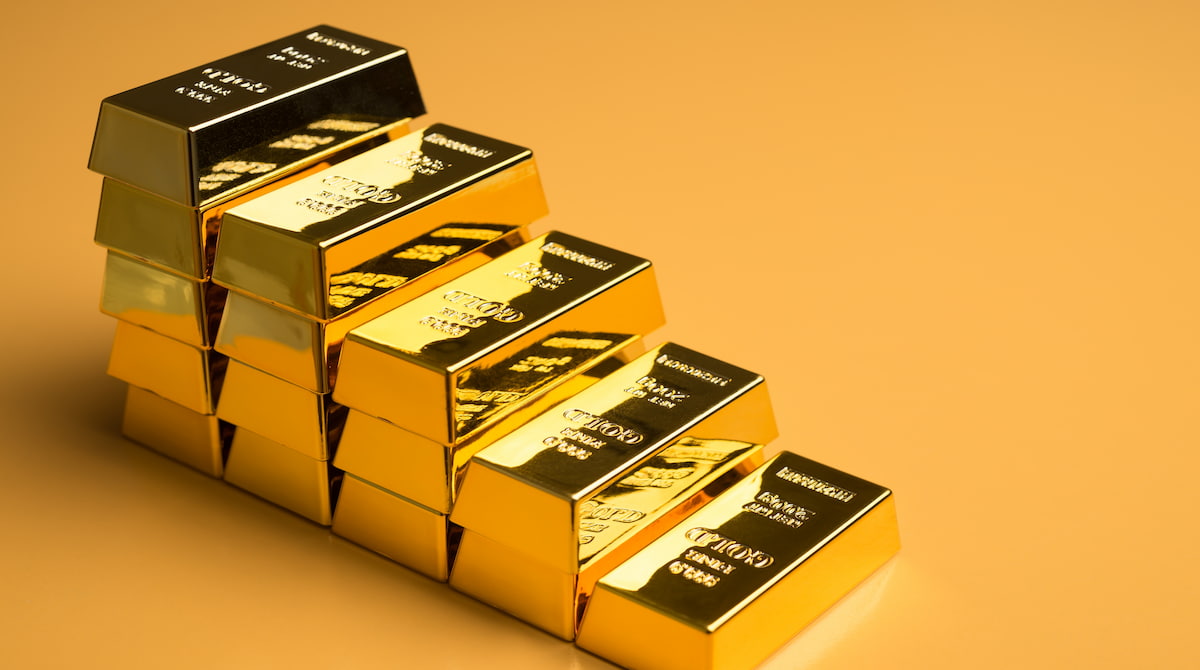
On Wednesday, spot gold fell 1.7% to $4,191.84 an ounce, which was its lowest level since March 23. This happened because new war actions between the US and Iran drove up oil prices and made people more likely than ever to think that the Fed will raise interest rates this year. The price of US gold futures for August delivery fell 1.6% to $4,215.60, making it four sessions in a row that they have lost money.
There is an irony to the selloff. Gold traded a lot in the first few months of the conflict between the US and Iran because it was seen as a safe haven asset in a world where a major shipping route was blocked and military insecurity was high.
That trade has turned around. The conflict that first pushed gold above $4,800 is now the main thing pushing it toward $4,100, and the Federal Reserve's interest rate calculations are the straight link between the two.
What Happened Tuesday — and Why Wednesday's Reaction Ran in Both Directions
In the events that led to Wednesday's rise in gold prices, President Trump said that Iran had shot down a US Apache chopper in the Strait of Hormuz. In response, the US attacked Iranian targets on Tuesday. In response, Iran's Revolutionary Guards said they attacked a US base in Jordan and 21 other places in the Gulf on Wednesday.
If things got that bad—if the US and Iran traded direct military strikes—gold would have gone up a lot in the past. The metal fell instead. To figure out why, you have to look at what the strikes did to oil, what oil does to predictions of inflation, and what expectations of inflation do to the Fed.
On Wednesday, oil prices went up about 1% because of new fighting, which made people worry about a wider energy disruption in the Gulf. That move kept the hope that energy-driven inflation would last alive and, in some ways, made it stronger.
When the data comes in on Wednesday, the CPI for May is likely to show that annual consumer inflation rose to 4.2%, which would be the highest number since April 2023. The PPI comes out on Thursday.
That kind of inflation print at a time when the Fed has been saying it can't cut rates forces a specific response: not just "no cuts," but more and more "hikes." The CME FedWatch tool now shows that more than 70% of market players expect the Fed to raise rates by December.
That chance was a tiny part of what it is now, a month ago. Many of gold's gains have been lost because of how quickly the market changed from expecting rates to go down to pricing rates to go up.
The Mechanism That Broke the Safe-Haven Trade
The change was named by Ilya Spivak, head of global macro at Tastylive: "We're seeing a kind of readjustment broadly in what global central banks are going to do, and there's been a major hawkish shift."
The Fed didn't say anything to cause that hawkish move. What Iran and the US did in the Gulf did. As a result of the military action in the Strait of Hormuz, shipping is slowed down, which limits the supply of oil. As a result, crude prices rise, which drives up energy costs and inflation expectations.
As a result, the Fed loses the power to cut rates, which increases the likelihood of rate hikes. As a result, Treasury yields rise, which makes the dollar stronger, and gold, which is priced in dollars and doesn't yield, is squeezed from both ends at the same time.
Treasury yields stayed close to multi-month highs into Wednesday. The US Dollar Index moved close to a two-month high that was hit earlier in the week. It stayed flat for the session but is now at a level that makes gold lose value in dollar terms. People from other countries have to pay more for the metal in their own currencies, which lowers demand from market groups that have been buying gold to protect their dollars.
The opportunity cost argument hits hardest in this environment. When 10-year Treasuries yield meaningfully and the Fed is pricing in further hikes, institutional allocators face a straightforward comparison: hold gold at zero yield with downside price risk, or hold Treasuries with a guaranteed return and the possibility of capital gains if the economy softens. Gold only wins that comparison when rates are falling or expected to fall. Right now, rates are expected to rise.
$4,100: The Level That Changes Everything
If the next major support level is broken, Spivak was very clear about what it would mean: "If we can break the $4,100 level, I think the path of resistance fundamentally changes for gold, and we might be starting to look at $3,500 as the next level into the end of the year."
That's a drop of about $700 from where it is now if the support at $4,100 fails. The way that $4,100 is framed is important because it's not a round number. It's about where a lot of gold buyers who bought during the March–April conflict surge would break even. If they lost it, stop-loss selling would happen, which could speed up the move beyond what fundamental analysis alone would cause.
From Wednesday's price of $4,191 to that level, it's only about $90, which is too close for comfort given how quickly prices have been falling lately. Since prices have gone down four times in a row and the macro story has become even more pessimistic, the level could be tried before the CPI data has been fully analyzed.
The fix right away most likely comes from the CPI print. A number at or above the consensus 4.2% would support the idea that inflation is rising, support the idea that the Fed will raise rates, and most likely push gold toward the $4,100 test level.


Bonus rebate to help investors grow in the trading world!