English




Mastercard Stablecoin Settlement: The Plumbing Play

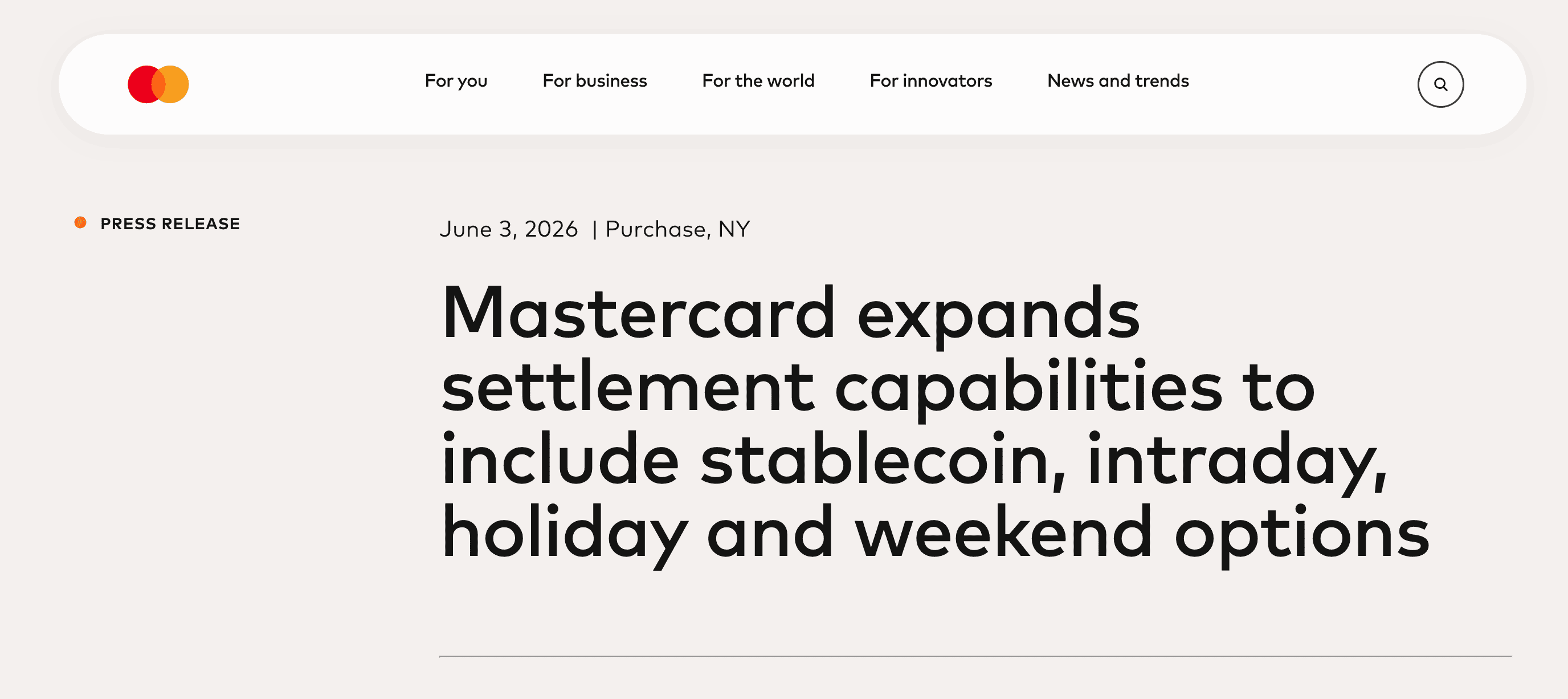
On June 3, 2026, Mastercard added regulated stablecoins to its global settlement network, with intraday, weekend, and holiday settlement rolling out alongside fiat. The easy headline is "another giant embraces crypto." The accurate one is narrower and bigger: stablecoins are migrating from the consumer-facing payment layer into the settlement plumbing between financial institutions.
The point isn't paying with stablecoins—it's banks settling in them
Card settlement between issuers and acquirers has always been chained to banking hours and a T+1/T+2 rhythm; on weekends, capital effectively sits idle. Mastercard's design adds an on-chain settlement rail on top of the same infrastructure institutions already use: USDC, PYUSD, USDG, USDP, RLUSD, and SoFiUSD settling across Ethereum, Solana, Polygon, Base, Arbitrum, Canton, Tempo, and the XRP Ledger.
For a treasurer, this hits one specific nerve: working-capital efficiency. Always-on settlement means money no longer "sleeps through the weekend." As Mastercard's blockchain EVP Raj Dhamodharan framed it, this phase of stablecoin adoption is about real-world utility, where timing and liquidity matter most.
Canton and Tempo are the tell most coverage missed
Reports fixate on XRPL and Ethereum. The underpriced signal is the inclusion of Canton and Tempo. Canton is a network built for institutional privacy and compliant settlement; Tempo is a newer payments-focused chain. Their presence reveals the target isn't just retail remittance—it's wholesale, institution-to-institution settlement, the far larger prize.
It also shows this was no impulse move. Mastercard agreed in March 2026 to acquire enterprise stablecoin infrastructure provider BVNK for up to $1.8 billion, and granted a Principal Membership to stablecoin issuer Rain last month. Build the rails first; open the gates second.
A validation moment for RLUSD—and a race with Visa
For the Ripple ecosystem, this is a watershed. Ripple's Jack McDonald called the integration a landmark validation for blockchain payment infrastructure, placing RLUSD and the XRP Ledger inside core institutional settlement. But the competitive frame matters: Visa has been expanding its own multi-chain stablecoin settlement pilots, and MoneyGram launched its MGUSD stablecoin on Stellar. The contest for settlement-layer rails is now open.
The pragmatic read: the initial rollout targets the U.S. and Latin America, with broader expansion planned through 2026. The catalyst to watch isn't the announcement—it's the cadence of expansion and how cleanly it docks with each jurisdiction's rules.


Bonus rebate to help investors grow in the trading world!