English




Micron Crosses $1 Trillion as UBS Sets Street-High $1,625 Target

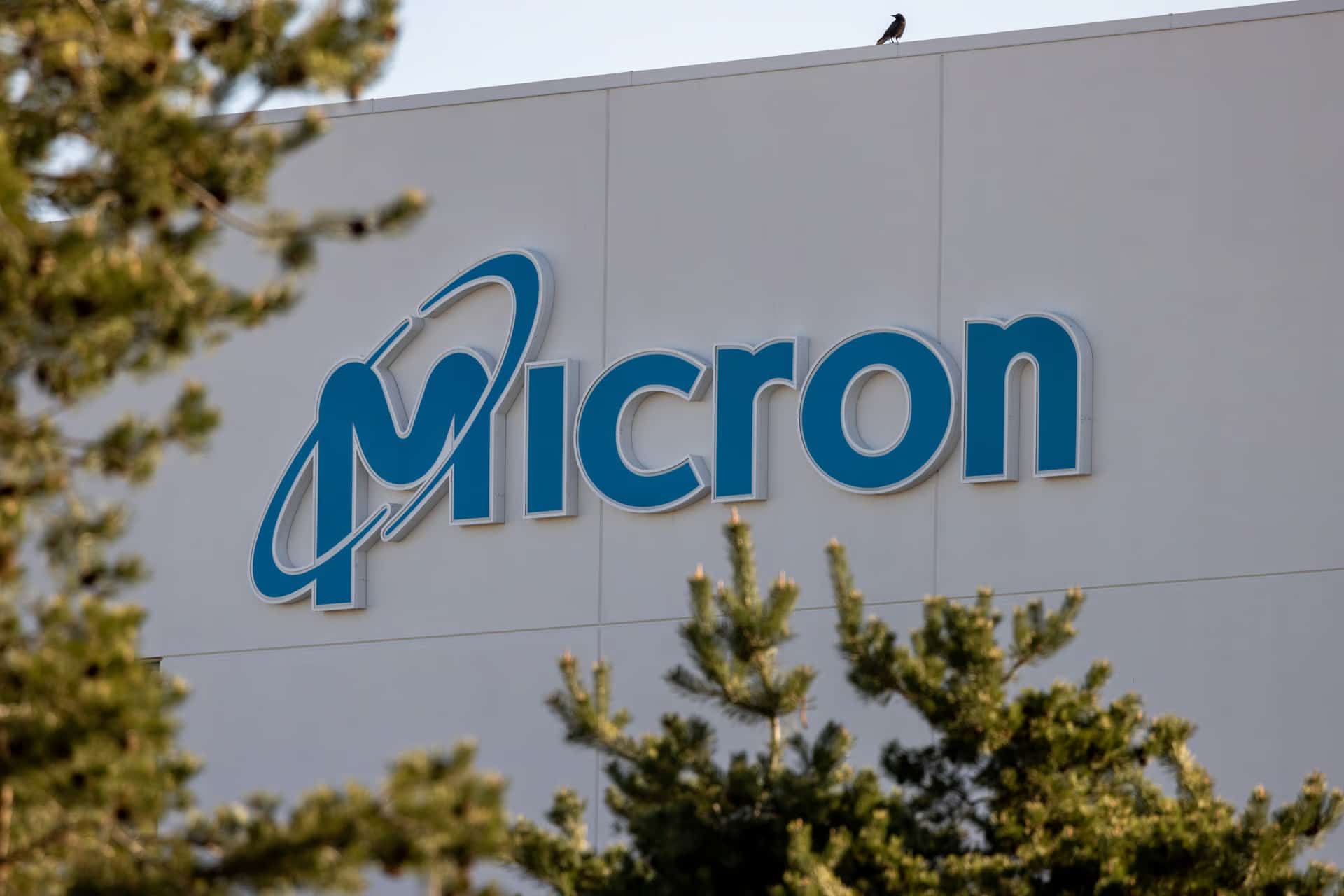
Today was the best day for Micron Technology (NASDAQ: MU) since 2011. It went up 19.29% at the end of the trading day after UBS analyst Timothy Arcuri raised the firm's price target from $535 to $1,625. This is the highest price target on Wall Street for the stock and more than triple the previous estimate. Micron's market value went over $1 trillion, making it the 11th largest public company in the U.S., just behind Eli Lilly and ahead of Walmart.
At the $1,625 goal, Micron's market value would hit about $1.8 trillion, putting it seventh in the U.S., behind Nvidia, Alphabet, Apple, Microsoft, Amazon, and Broadcom but ahead of Tesla, Meta, and Berkshire Hathaway.
What UBS Is Actually Arguing
The headline number is extraordinary, but the analytical thesis behind it is more consequential than the target itself. UBS is not simply raising numbers — it is making a structural argument that the framework investors have used to value Micron for decades is fundamentally wrong for the AI era.
Micron has historically traded as a cyclical commodity producer, with valuation multiples that compressed in down cycles and expanded in up cycles, driven by DRAM and NAND pricing volatility. The boom-bust cycle was the defining investment risk for the stock. Arcuri's core thesis is that AI demand is breaking that cycle — not moderating it, but structurally ending it.
Hyperscale cloud providers are more and more willing to sign long-term agreements (LTAs) with partially fixed pricing. In return for supply security and predictable deployment costs over a number of years, they are willing to make small price concessions. This model, which is the first real LTA to appear on a large scale in the memory business, changes Micron's earnings visibility from uncertain quarterly pricing to guaranteed multi-year income streams. "The market should start putting a more 'normal' multiple on Micron as investors get more evidence of the changes AI has driven across the memory complex," Arcuri said.
Micron's earnings profile will resemble that of a growth company rather than a commodity cycle play if the LTA model continues, and growth company multiples are unquestionably higher than cyclical multiples. UBS is pricing that re-rating at $1,625.
The Numbers Behind the Thesis
There is observable evidence to support the structural argument. As of Tuesday's end, Micron had reached a record high of 28 sessions in 2026. Over the past year, the stock has increased by more than 800%. In seven of the last eight weeks, the Philadelphia Semiconductor Index has increased. The larger memory complex moved in support of the UBS thesis on Tuesday, with Western Digital up 8.3%, SanDisk up 7.5%, and Qualcomm up 4.5%.
The near-term fundamental foundation for the re-rating argument is provided by Micron's Q3 sales guidance of $33.5 billion, a 260% year-over-year rise, and gross margin guidance of roughly 81%. HBM prices and volumes are still high. The availability of conventional DRAM is limited. All of the company's HBM output for 2026 is committed.
The consensus opinion is much more cautious. There are 49 buy ratings and 5 hold recommendations among the analysts who cover the stock; there are no sell ratings. However, the consensus price objective of $685.82 indicates a decline of more than 23% from Tuesday's closing price. The difference between UBS's $1,625 and the $685 consensus is instructive in and of itself; this is not consensus repricing, but rather a true analytical disagreement.
The Structural Memory Cycle Argument in Full
The need for AI technology is changing the basic economics of memory in three ways.
First, the demand for HBM is limited by physics, not just the ability to make enough of them.The stacking technology needed to put high-bandwidth memory next to AI accelerators has few providers and qualification cycles that last for years.
Second, standard DRAM is losing ground because the same companies are moving advanced capacity to HBM, which makes DRAM in general less available.
Third, LTAs are becoming more common as hyperscalers put supply security ahead of spot market efficiency.
The first two factors are already producing the financial results visible in Micron's recent quarters. The third factor — LTAs — is the element UBS is most explicitly pricing that the consensus has not yet incorporated. If LTAs become industry standard, the memory industry's valuation framework changes permanently. If they prove fragile — cancellable when supply normalises — the cyclical risk reasserts.
The biggest worry for 2028 is still that there will be too much supply; new capacity from Samsung, SK Hynix, and Micron itself could all arrive at the same time, which could lower prices if demand slows down. The chief financial officer of Micron has made this risk clear. The $1,625 goal set by UBS suggests that LTA structures will help to smooth out that cycle. This idea will be put to the test in the real world between now and 2028.
Technical Levels and Near-Term Positioning
Micron's stock broke through levels of resistance and ended the day at a new high. The new floor for the bulls needs to be $800. Should this old high be broken below, it would show that the rise was fake.
It's most stable below that at around $665. In 2026, the stock has hit 28 new all-time highs, and the Philadelphia Semiconductor Index has had seven of eight weeks of gains. This makes me think that the trend is structurally supported and not just going to last longer.
UBS's $1,625 price estimate is the most aggressive on a semiconductor stock in recent memory. It is based on a specific structural argument about LTAs and memory cycle de-cyclicalization.
The next important test will be the earnings report for the third quarter, which is due on June 24. The report will include guidance for an 81% gross margin and $33.5 billion in sales. This will either prove or disprove UBS's theory that LTA is generating stable earnings. The price changes toward growth multiples will continue if approved. If margins fall below 80%, the cycle story comes back, and the difference between UBS's $1,625 and the $685 average becomes a more heated argument.


Bonus rebate to help investors grow in the trading world!