English




Micron Stock Up 180% This Year — Is the AI Memory Supercycle Just Getting Started?

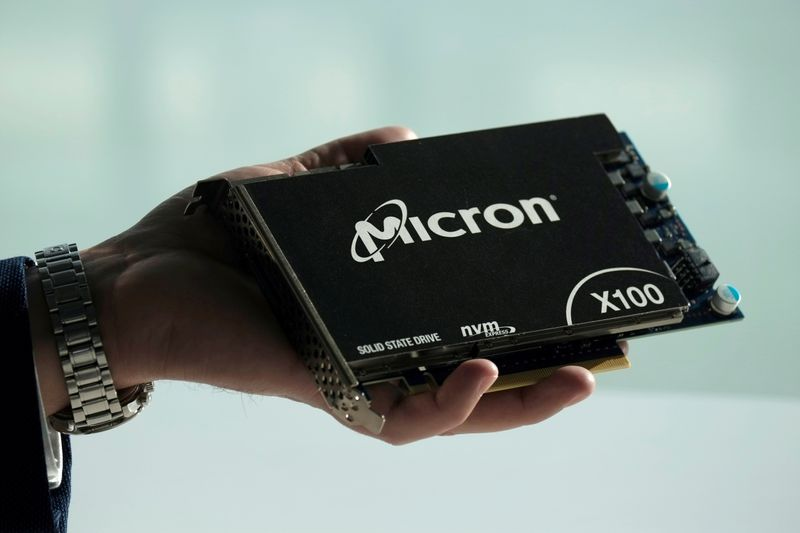
Micron Technology (MU) rose 6.5% on Monday, continuing one of the bravest runs in the chip market this year. The prices of options show what experienced traders think will happen next: a move of 8.6% in either way by Friday night. If you do the math, Micron shares will hit about $864, which would be a new record high and a 15.6% buildup for the week. That would be the stock's second-best week of 2025, after last week, when shares went up almost 38%.
If Micron's price falls by 8.6%, it will be around $727, which is just below where it was selling before Monday's session. The difference between those two results shows that the people who buy these options aren't mainly protecting themselves from bad things happening. They are hoping that it will go on.
It's worth about 18% more now than it did on January 1 and almost twice as much in the last month alone. Geopolitical insecurity and volatile energy prices are making the stock market grind to a halt. So when a memory chip maker posts those numbers, they don't go unnoticed—it's one of the most closely watched momentum trades on Wall Street right now.
What's Actually Driving This — It's Not Hype
If the fundamentals weren't supporting the results, it would look like too much speculation. Yes, they are.
Micron's net income rose by 770%, sales margins doubled, and revenue almost tripled in the most recent fiscal second quarter. These aren't the numbers of a company riding a wave of good feelings; they show real financial leverage from a change in the structure of what data centres need. Analysts had to make big changes to their models in the days after the report because the company's sales and earnings guidance for the third quarter was so much higher than what they thought it would be.
Need for AI technology is the main driver. big companies like Microsoft, Amazon, and Google are building out data centres on a scale that has never been seen before. To run the GPU clusters that power big language models and AI inference workloads, these companies need a lot of high-bandwidth memory (HBM).
Along with SK Hynix and Samsung Electronics, Micron is one of only a few companies in the world that can make that kind of memory on a large scale. Both of these companies advanced on Monday with Micron.
The Roundhill Memory ETF (DRAM) went up, but most of the big indices stayed the same. This was because most sectors fell because of high energy prices and the political situation in Iran. The memory chips went the other way. Analysts say that predictions for margins are getting better across the board.
Some think that global gross margins will be above 75% by 2026. Micron has been going up in 11 of the last 15 trading sessions, which shows that institutions are buying rather than individual investors trying to catch the trend.
The Supply Shortage Is as Important as the Demand Story
Memory chip numbers are going up because AI buildouts need them to. Because of a lack of supplies, prices and profit margins are both going up at the same time. This is what Micron just showed is possible with economic leverage.
The memory business goes through cycles. When there is too much supply, prices and profit margins fall; when there is not enough supply, they rise. The persistent lack of HBM and DRAM in general is a result of both demand that grew faster than planned production and the fact that adding significant capacity requires a lot of money. It costs a lot of money and years to build a new memory factory. The way a software company can handle a rise in demand in just three months is something you can't do.
The term "memory supercycle" is used by analysts who follow the sector to describe what's happening: a multi-year demand growth driven by AI that's different from previous cycles that were tied to waves of new smartphones or PCs. Back in the 2010s, smartphones were all the rage for a long time. As long as the AI infrastructure buildout keeps going at even a small rate, the memory needs it creates could last for a long time. When investors price Micron at its current level, they are clearly making that bet.
Wall Street Is Bullish — But the Target Price Gap Is Striking
It's safe to say that most analysts are optimistic about Micron. Ten of the eleven analysts that Visible Alpha tracks who have reports on the stock right now rate it as a Buy. There is one outlier that is neutral, not bearish. At the moment, no analyst with an active review on Micron suggests selling.
This is where things get interesting: even though all analysts see things going in the right direction, the average price target of $539 means that the stock will fall about 32% from Monday's closing price. One expert, whose price target is $1,000, thinks the stock will be worth more a year from now than it is now.
There is a tension that only exists in stocks that move this quickly between people who are optimistic and people who are cautious about price goals. Analysts set goals using models that are connected to expected profits, valuation multiples, and similar price ranges from the past.
When a stock doubles in a month, the models don't instantly double with it. Instead, they require analysts to either drastically raise their estimates or admit that the current price of the stock already takes into account several years of expected growth. Most are doing a mix of the two, which is why it's rare for a stock with ten Buy ratings to be 32% above the consensus goal price.
It makes sense: Wall Street believes in the company, but they think the stock has short-term expectations that are too high. At the moment, the market doesn't agree, and it hasn't agreed for a month.
Micron Is Decoupling From the Broader Market
The lesson on Monday taught me more than just how prices moved. The S&P 500 was mostly flat, and most sectors fell because of higher oil prices and the lack of information about the Iran war. Micron went up by 5–6% in that setting. Chip stocks did better than most other stocks, while energy-related or macro-sensitive companies did not change much.
This market has always had this kind of sector decoupling, where names in AI technology trade based on their own supply and demand rather than the bigger picture. Not completely true; a real economic shock big enough would make Micron and everything else fall.
But the spending cycle on AI infrastructure doesn't seem to be affected by changes in energy prices or geopolitical noise, so investors are treating it as a different economic regime. Even though oil is $100, hyperscalers aren't stopping the building of their data centres. If anything, AI services give them more reason to speed up because they bring in more money and make more money on margins.
It will be put to the next big test when the earnings report comes out next month. Investors want to know if Micron's predictions came true, if HBM demand stayed as strong as expected, and if the path to a margin of 75% or more is still on track.
That recent guidance "blew Wall Street estimates out of the water" means that the bar is higher now than it was three months ago. This is important to note even though the stock has been consistently rewarding bulls.
What the Options Market Tells You About Conviction
The predicted weekly move of 8.6% that is shown by the current price of options is not a random number. It shows what options traders, market makers, and institutional hedgers think about how much Micron is likely to move based on what they know and what they think will happen.
It's a big deal that a stock that's already up 180% for the year is expected to move another 8.6%. This means that traders think volatility will stay high, that they are actively positioning, and that the next event could move the stock significantly in either way.
The directions aren't the same. A weekly gain of 15.6% from an upward move of 8.6% is completely new price discovery land. It's a record high with no previous point of reference. Depending on whether follow-through buying happens or profit-taking takes over after the initial push, those moves can keep the momentum going or wear it out.
A drop to $727 would be a normal pullback after the recent run. This is the type of correction that people have bought in droves in the past few weeks.
At this point, neither result would really change the Micron story. A stock that has tripled its sales, doubled its margins, and seen its net income grow by 770% doesn't become a sell story after an 8% weekly drop. It stops being about the investment idea and starts being about when to get in.
Micron is in the middle of two of the most powerful forces in the tech market right now: the building out of AI infrastructure and a memory supply shortage that is driving up prices and earnings at the same time. The stock has gone from being a normal chip name to one of the year's most important momentum trades because of its strong earnings, which were shown in the most recent quarter and are expected to be even higher in Q3.
There are real risks. The price of the stock could drop sharply if the memory cycle turns faster than predicted, if hyperscaler AI capex slows down, or if there is a macro shock big enough to cancel out sector-specific tailwinds. The average analyst warning of a 32% drop from current levels is not irrational; it shows how far away current market prices are from the middle range of basic valuation models. Markets can go both ways and be wrong.
This week, players in options are telling you that people who have money on the line expect another big move. The past month—38% in one week, which is twice as much since the end of March—indicates that these predictions haven't always been wrong.
The story will either continue or stop when the earnings report comes out next month. Until then, Micron is relying on both basic performance that has been proven and the belief that the AI memory demand cycle has a lot more to go.


Bonus rebate to help investors grow in the trading world!