English




Nintendo Drops 9% as Switch 2 Price Hike and Weak Guidance Disappoint

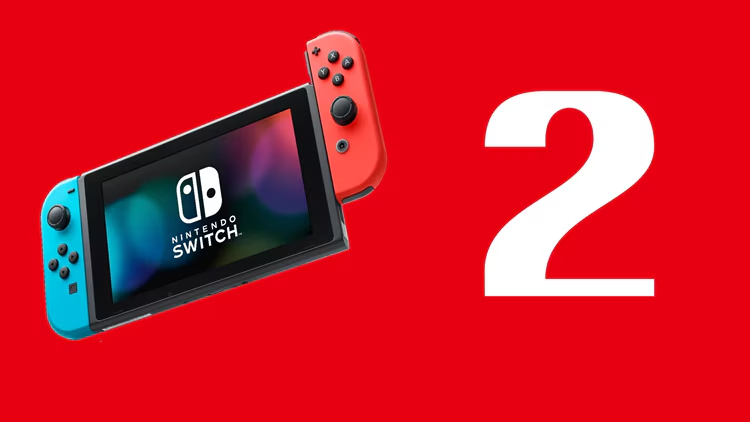
Nintendo (TYO: 7974) slid as much as 9% to 6,895 yen Monday — one of the worst Nikkei 225 performers on a day the index itself rose 0.8% — after the Japanese gaming giant delivered annual earnings that missed market expectations and issued fiscal 2027 guidance that fell dramatically short of analyst forecasts.
The culprit is a problem that has nothing to do with Nintendo's game design capabilities: the global AI-driven memory chip shortage is raising component costs fast enough to force price increases on the Switch 2, which in turn is expected to suppress the console unit sales that Nintendo's entire business model depends on.
The Numbers That Disappointed
Nintendo's operating profit for the year ended March 31 jumped nearly 28% to 360 billion yen ($2.29 billion), aided by a near 100% increase in net sales — impressive headline metrics in isolation. But the profit figure still fell short of market expectations, and the forward guidance delivered the real shock.
The company forecast fiscal 2027 operating profit of 370 billion yen — well below analyst expectations of approximately 480 billion yen. Sales are projected to fall 11.4% year-on-year to 2.05 trillion yen. Switch 2 unit guidance landed at 16.5 million units, a meaningful step down from the 19.86 million units sold in the prior year. That 17% unit decline, combined with rising costs, narrows the margin profile of Nintendo's flagship product precisely when it needed to sustain momentum.
The AI Memory Shock Has Reached the Living Room
The structural driver of Nintendo's guidance problem is external and largely beyond management's control. The same AI infrastructure buildout that has propelled SK Hynix and Samsung to record operating margins — by redirecting more than 90% of advanced memory capacity toward HBM and high-end data centre memory — has created a severe shortage of conventional DRAM that consumer electronics manufacturers depend on. Nintendo is a direct casualty.
The company will raise the Switch 2's retail price to $500 from $450 — a 11% increase in the U.S. — effective September 1, 2026, with similar increases of 7% to 20% across European and Japanese markets. Higher component costs, especially memory, are the explicitly stated reason.
For a console that launched as a blockbuster and was one of the fastest-ever selling gaming platforms, a mid-cycle price increase is an unusual and commercially risky move. At $500, the Switch 2 enters a price bracket that has historically been challenging for console adoption — particularly in markets where the product is no longer a launch-window novelty.
Nintendo acknowledged the unit guidance impact directly: the 16.5 million unit forecast reflects the expectation that higher prices will dampen consumer demand. That is an admission the company has limited ability to absorb the memory cost increase in its own margins at current volume levels.
Software and the Sony Comparison
Nintendo's guidance did identify software as a partial offset — first-party game sales are expected to pick up through fiscal 2027, and a "whole host" of third-party releases are flagged for the coming months. Software carries higher margins than hardware and does not face the same memory cost pressure, making it a genuine near-term buffer. But the first-party lineup for 2026 "largely underwhelmed" investors, per market reaction, limiting confidence in the software recovery thesis.
The competitive contrast with Sony is stark and unflattering. Sony shares rose Monday after the company projected stronger gaming profits and outlined cost-control measures — a response that highlights Nintendo's structural exposure to hardware cycles and component costs that Sony, with its more diversified business across entertainment, electronics, and financial services, is better positioned to absorb. Nintendo's heavy dependence on its gaming business leaves it with fewer levers to pull when hardware economics deteriorate.
Nintendo's 9% drop reflects a genuine re-rating of the Switch 2's commercial trajectory for fiscal 2027. The AI memory shortage is not a Nintendo-specific problem — it affects every consumer electronics manufacturer — but Nintendo's single-product dependence makes the impact more concentrated than it would be for a more diversified technology company. The 370 billion yen operating profit guidance versus the 480 billion yen consensus is a 23% gap that cannot be explained by one bad quarter. It reflects a structural cost increase that the company does not expect to normalise within the fiscal year.
Watch the September price increase implementation carefully. If Switch 2 sell-through data following the $500 price point proves resilient — supported by strong software releases — the guidance may prove conservative. If unit sales disappoint below the 16.5 million projection, margin compression and a further guidance cut become the downside scenario. The AI memory cycle, not Nintendo's creative capabilities, is the variable that will resolve this story.


Bonus rebate to help investors grow in the trading world!