English




Nvidia Blackwell Supply 'Never Seen Such Tight Conditions' — SKT Deploys 1,000 GPUs

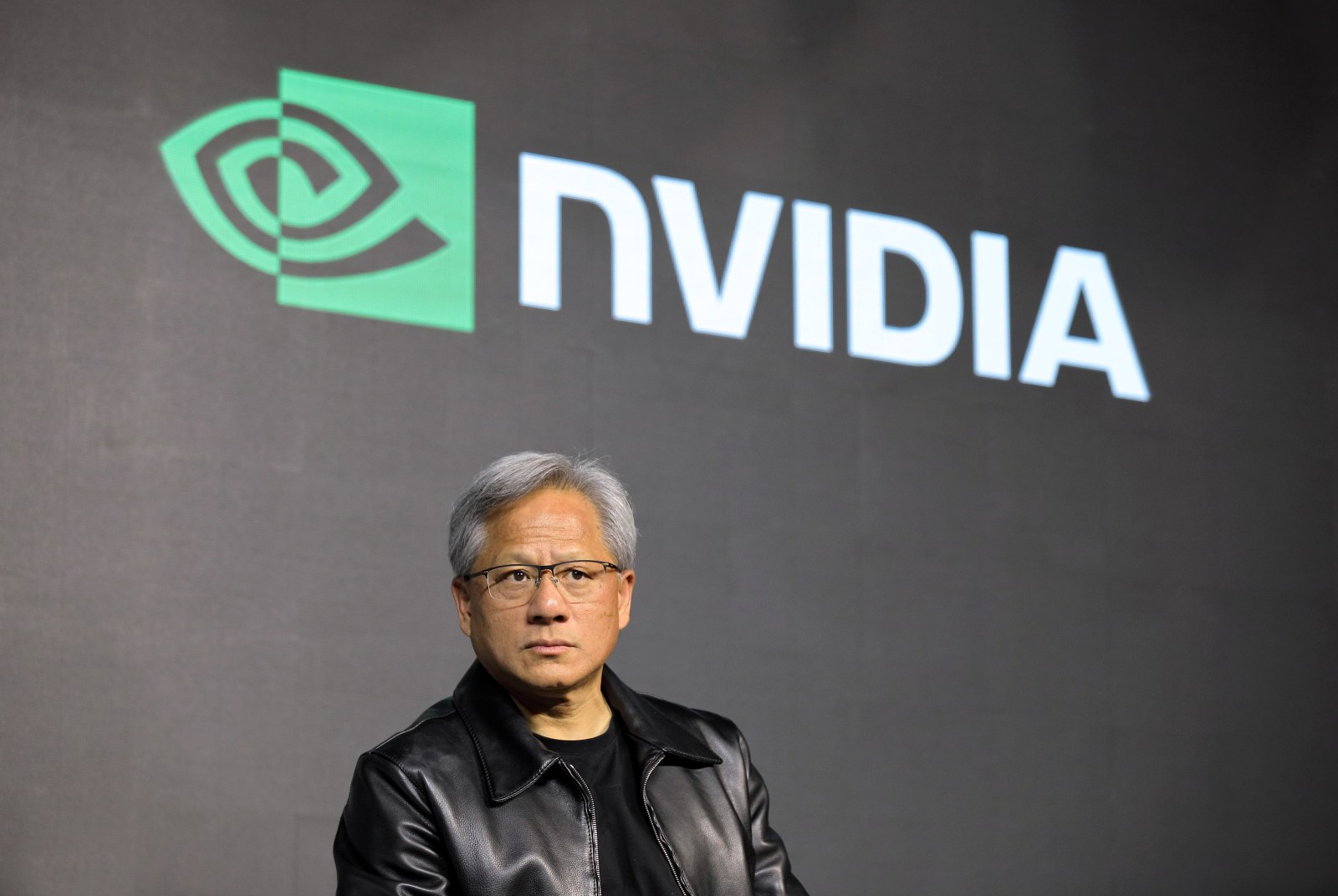
Nvidia (NVDA) Blackwell chips are in the tightest supply conditions "since Ampere/Hopper," according to Wedbush Securities analysts Matt Bryson and Antoine Legault — demand is growing faster than previously anticipated, with procurement challenges intensifying late in the accelerator cycle.
The report came out at the same time that SK Telecom launched "Haein," a platform for autonomous AI infrastructure that includes more than 1,000 Nvidia Blackwell GPUs, making it one of the biggest GPU clusters in South Korea. It offers GPU-as-a-Service and was chosen to support the country's national AI foundation model program.
Wedbush keeps its "Outperform" rating on Nvidia and sets a price goal of $330, which means the stock could go up about 58% from its current price. The company thinks that the investment wave in AI infrastructure is still in its early stages and that strong demand will continue beyond 2026.
What Wedbush Found: Supply Tightest in Years
There is a serious lack of supplies. "Since Ampere/Hopper, we cannot recall such severe supply tightness this late in NVIDIA's accelerator cycle," Bryson and Legault wrote in "This outcome suggests that demand is growing faster than previously anticipated."
The delay is caused by two things. First, demand for AI technology around the world is rising much faster than expected. Second, supply lines are still being slowed down by the need for high-bandwidth memory (HBM) and advanced packaging capacity for Blackwell systems.
TrendForce expects Nvidia's Blackwell platform to account for 71% of the company's high-end GPU shipments in 2026, solidifying its dominant market position. Nvidia has already sent samples of its next-generation Rubin architecture to select top-tier partners, but large-scale shipments face HBM4 certification and power management challenges — volume ramp-up not expected until second half of 2026.
Wedbush highlighted Nvidia's advantage in the supply chain. The company made sure it would get DRAM and HBM for 2026 and probably 2027 as soon as possible. If demand keeps going above and beyond what was expected, competitors, cloud service providers, and device makers may have to deal with similar or even worse problems.
"While we certainly do not suggest that NVIDIA's peers have failed to secure future supply commitments, we believe no other chip design company, CSP, OEM, or similar entity faces less resistance — and likely more — in securing the incremental components needed to meet any additional demand growth," Bryson continued.
SK Telecom's 'Haein': From Telco to AI Infrastructure Giant
The demand is translating to deployment. SK Telecom's Haein platform went live on August 5, 2025, handling both training and inference — the two most compute-hungry tasks in the AI stack. SKT partnered with VAST Data to implement its "AI Operating System" tailored for Blackwell infrastructures. Supermicro contributed hardware optimization. The partnership, announced August 14, 2025, focuses on improving virtualization and data pipeline performance for multi-tenant setups.
The scale is ambitious. SK Group's broader AI factory initiative calls for deploying more than 50,000 Nvidia GPUs, with SKT as a key partner. Haein builds on a previous cluster based on Nvidia H100 chips. As of June 2026, SKT and Nvidia announced plans to scale to a "gigawatt-scale AI Cloud" using the Nvidia DSX platform — first AI factory expected online in 2027. SKT is targeting AI training, inference, robotics, and various industrial applications.
The sovereign AI angle gives SKT something AWS, Google, and Microsoft can't easily replicate. South Korea's government wants AI infrastructure that stays within national borders, built and operated by domestic companies. Being selected for the national AI foundation model program is the clearest signal of that advantage.
71% is the Blackwell platform's expected share of Nvidia's high-end GPU shipments in 2026. The supply tightness this late in the cycle suggests demand is accelerating into 2027 — not decelerating. The Rubin architecture sampling is the next-gen signal, but HBM4 certification delays mean Blackwell stays the workhorse through at least H1 2026.
$330 is Wedbush's target — 58% upside that assumes the AI infrastructure wave is still early. The HBM and advanced packaging bottlenecks are the constraints that actually protect Nvidia's pricing power. Competitors can't source memory. Nvidia can.
1,000 GPUs is Haein's starting size. 50,000 is the SK Group target. The gigawatt-scale AI Cloud is the 2027 milestone that shows sovereign AI infrastructure buildouts are moving from pilot to production. SKT's $16B-plus annual revenue and direct government support make it the centralized version of the decentralized GPU marketplace thesis.
The Blackwell supply tightness is the trade's clock. Watch whether Nvidia can expand HBM supply partnerships beyond SK Hynix and Samsung to meet demand — or whether the bottleneck persists and prices for Blackwell systems keep rising. The Rubin ramp in H2 2026 is the supply relief valve. Until then, every GPU shipped is sold.


Bonus rebate to help investors grow in the trading world!