English




Oil Crashes Below $100 as Trump Eyes Iran Exit — What's Next?

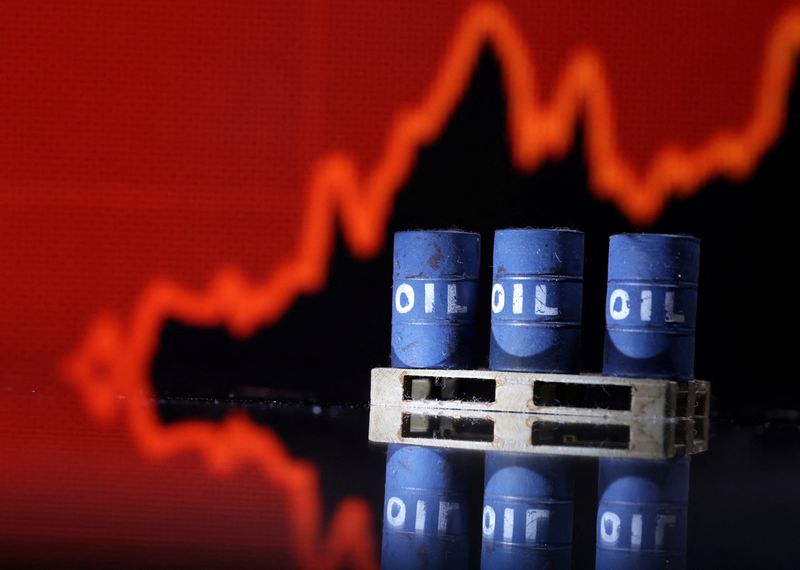
Wednesday, the price of a barrel of Brent oil fell below $100. It didn't go down slowly; it fell 4% to $99.81, which is the kind of drop that traders are paying attention to at 3 a.m. Even WTI went down, 3.6% to $97.63. Brent had closed at $118.31 just 24 hours before. This is a $18 swing in one session, and it's all because of something Donald Trump said in the press and a story in the Wall Street Journal that quietly killed the hope that came with it.
Trump said that the US might not have to fight Iran anymore in "two to three weeks." At first, markets bought it. In early Asia trade, Brent went up to $105.36. Then, the Wall Street Journal said Trump had told his staff behind closed doors that he was ready to end the U.S. military effort even if the Strait of Hormuz stayed mostly closed. That's when things got tricky.
Why the Hormuz Caveat Changes Everything
The part that doesn't get enough attention in the news is that a truce and reopening the strait are not the same thing. The Strait of Hormuz moves about one-fifth of the world's oil. This is not a small amount, but a part that can't be replaced. Since the fighting started, tanker travel through it has pretty much stopped. The people who write insurance won't touch those paths. Even the people who run ships don't like it.
On Tuesday, API CEO Mike Sommers made it clear: reopening the strait is "the critical piece" to making global markets stable. That problem doesn't go away just because there isn't a war going on. Even when conditions are good, it can take weeks or months to physically clear a waterway, which includes restoring insurer trust, getting operators back on routes, and making sure everyone can get through safely.
So the prices that markets are setting now aren't peace. There is no source for peace. There is a big difference between that and what the original rally in March was betting on.
March's 63% Rally Was Built on a Specific Fear — and That Fear Hasn't Disappeared
March saw a huge jump in Brent of more than 63%, which was the biggest monthly gain in recent memory. That move wasn't just a waste of money on speculation; it was a real shock to supply lines around the world. When a chokepoint that handles one-fifth of the world's crude oil goes, the numbers are harsh and happen right away.
The drop on Wednesday looks very big when compared to the rise. Take a step back, though. Even at $99, Brent is still selling at levels that would have seemed unreal just six months ago. The question isn't whether prices went down; it's whether the reason for the drop fixes the real issue. It doesn't right now.
Masoud Pezeshkian, the president of Iran, added another level of difficulty. According to state media, he is ready to end the war and also restated Iran's main demands. That isn't a shake of hands.
That's the start of a discussion, which can take a long time. Trump also said he would address the country at 1:00 GMT on Thursday with "an important update." This could mean anything from announcing a ceasefire to making things worse. Traders who go into that window are pretty much flying blind.
The Inventory Data Doesn't Help the Bull Case Right Now
Aside from all the political news, Wednesday also saw a really bad inventory print. The amount of crude oil in the U.S. rose by 10.26 million barrels last week, according to figures from the American Petroleum Institute. Most people thought there would be a draw of 1.3 million barrels. There had already been a 2.3 million barrel rise the week before.
Both of those numbers were way off from what was expected, which tells you something about demand in the United States. A 10-million-barrel build doesn't mean that the market is running hot on the demand side, whether it's because refinery margins are forcing them to cut back on usage or because of higher prices, industrial activity is slowing down.
That's right, this is info that only applies to the United States. It doesn't always show what's going on in Asia, where readings of demand have been more stable. But buyers had something real to sell against on Wednesday morning, and they did.
Two Scenarios, and One Is Considerably More Uncomfortable Than the Other
If peace is reached, Hormuz will reopen, maybe not right away, but within 30 to 60 days. Tanker flows return to normal. The risk premium that kept Brent above $110 for most of late March is beginning to fade. When you look at the weak U.S. inventory picture, possible OPEC+ output responses, and some lost demand from months of high prices, it's not hard to imagine that prices will drop to $80–85/bbl by the middle of the year.
If it doesn't, Iran's conditional stance means that talks could last for months. A waterway that handles 20% of the world's supply is shut down for a while, not forever, but long enough to cause other problems. Reserves for the future are used up. Product markets start to show that there aren't enough refinery feedstocks. Inflation caused by fuel costs affects the CPI in Asia and Europe, making it harder for central banks to make decisions that were already hard to make. In that view, the prices that went over $110 in March don't seem like a big jump, but more like a sneak peek.
It's the middle case—partial settlement, intermittent access, and long-term uncertainty—that doesn't get talked about enough. That might be the worst thing that could happen to the market, not because prices would definitely reach new highs, but because producers don't invest enough and consumers make bad decisions about what they want that take years to fix.
What Traders Should Actually Be Watching
The sub-$100 print on Wednesday will get all the attention. It shouldn't take over the research. The drop is due to a global warning that was explained in great detail in the small print. A message from Washington calling for peace doesn't clear a trade lane.
The facts that are more important than Trump's speech on Thursday:
Tankers can be tracked as they go through the Gulf. The real warning will come if ships start moving again in large enough groups. The EIA's inventory numbers on Wednesday will either back up or disprove the API's negative reading. And if OPEC and other countries work together in an emergency,which is more likely if prices stay in the $95–100 range,it could bring back a supply-side risk that the market has not fully priced in.
As long as there is political noise, the $97–$99 range for WTI may hold as short-term technical support. But if Tehran says something tougher or there are empty ship lanes for another week, the trade will change.
Wednesday, oil has not made anything better. For now, it's just let out a breath.


Bonus rebate to help investors grow in the trading world!