English




Qatar LNG Hit: 17% Capacity Lost, Global Gas Crisis Looms

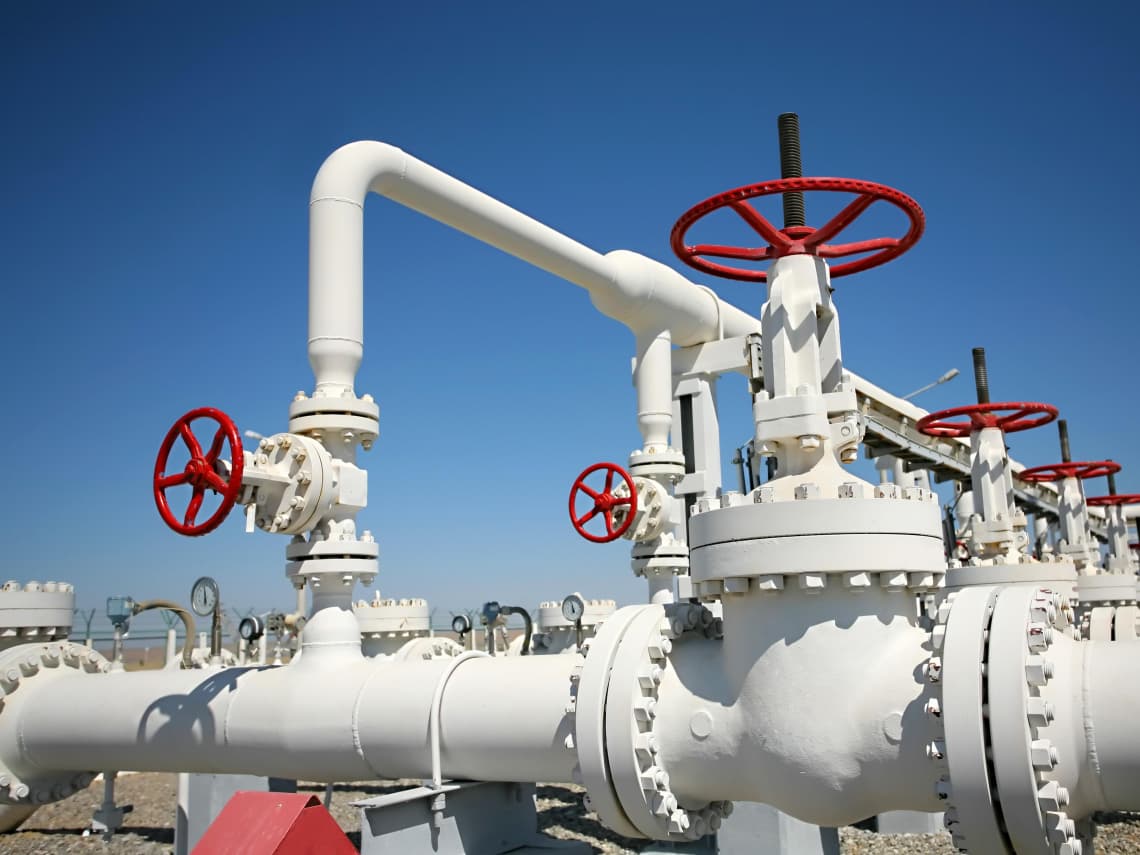
The moment Iranian missiles struck Ras Laffan, the supply logic of the global liquefied natural gas (LNG) market underwent a major shift. Qatar's Energy Minister and CEO of the state-owned company, Saad al-Kaabi, announced that the attack destroyed 17% of Qatar Energy's LNG export capacity.
Two of the 14 production lines were damaged, along with one gas-to-synthetic oil facility, resulting in an annual revenue loss of $20 billion and a repair period of approximately three to five years.
"I never dreamed that I would be attacked in this way by a Muslim brother nation during Ramadan," Kaabi said.
The reality behind this statement is harsh, because Ras Laffan is not a factory that can be quickly repaired; it is one of the largest and most technologically complex industrial complexes in human history.
Las Lafan: A Gas Chokepoint Underestimated for Three Decades
Understanding the true scale of Las Lafan in the global gas landscape helps explain the devastating impact of this attack. This facility typically takes 30 years to build, costs hundreds of billions of dollars, and occupies almost three times the size of Paris.
It produces 77 million tons of LNG annually. This is enough to meet Japan's annual gas demand, and even exceeds the annual demand of the UK and Italy. It is the most irreplaceable single node in the Asian and European energy import system, providing approximately 20% of the world's LNG.
The damaged two production lines will result in long-term LNG contracts to Italy, Belgium, South Korea, and China facing irreversible cancellations for up to five years.
Oil giant ExxonMobil (XOM) holds a 34% stake in the damaged S4 and 30% stakes in the S6 production lines. Shell's involvement in the natural gas synthesis facility is severely damaged, with a single repair period expected to exceed one year. Qatar's export revenue and the systemic reliability of the global natural gas supply chain have been affected by the direct involvement of the two major Western energy giants.
Why does it take three to five years to restore natural gas?
The market initially expected Ras Lafan to resume exports immediately after the Strait of Hormuz reopened. Now, however, the situation is that "Qatar will not return to normal production within weeks, regardless of when the conflict ends," a prediction directly contradicted by Tom Marzec-Manser, an LNG expert at energy consultancy Wood Mackenzie.
This is due to the specialized technology of liquefied natural gas (LNG) facilities. These facilities use specialized equipment to convert natural gas into LNG at extremely low temperatures, requiring extremely cautious operating procedures. Errors in any step could lead to a chain reaction of disasters.
More importantly, Qatar will only allow skilled workers to safely enter the workplace once it is assured that there will be no further attacks. However, this safe condition currently remains a long way off.
According to Marzec-Manser's previous estimate, Qatar would need forty days to restart production, but now everything has changed. Furthermore, he pointed out that Qatar had planned to add six liquefaction units this year and next to increase its capacity, but this plan has had to be postponed entirely. The anticipated increase in global LNG supply, which was expected to alleviate the crisis, has vanished after the attacks.
The Asia-Europe gas rush: Who will be the first buyer to be dumped on the spot market?
South Asia and Southeast Asia: The Most Vulnerable First Row of Victims
"South Asia and Southeast Asia will be the immediate victims," said Colpsson, portfolio manager at Davenport Energy.
Related data shows that Pakistan warned in mid-April that natural gas supplies might be insufficient to meet its electricity demand, especially for the country's main export industry, textiles. Due to natural gas shortages, many Asian countries are using liquefied natural gas (LNG) for industrial production, such as glass and fertilizers.
Evan Tan, an LNG analyst at ICIS, commented: "Instead of watching how high natural gas prices will rise, we are focusing on the price point that will completely force South Asian buyers out of the spot market." This statement reveals a reality worse than rising prices: no matter how much money is offered, it's impossible to secure supplies; some buyers are simply not squeezed out by high prices.
Europe's summer inventory replenishment will face direct competition from Asia.
Meanwhile, an assessment by a natural gas trader is widely circulating in the market: European natural gas prices will "continue to rise until 2027." Asian buyers, in order to fill the supply gap in Qatari LNG, will massively purchase alternative sources from the United States. The window for Europe to replenish its natural gas reserves this summer will be significantly narrowed by direct competition from Asian demand. Insufficient summer reserves will directly determine Europe's energy security margin next winter.
Can the United States and Australia fill this gap in natural gas supply?
The US and Australia, major LNG producers, are considered beneficiaries of the Qatar supply disruption. Japan has requested increased Australian supply, Bangladeshi officials are discussing expanding supply agreements, and the Taiwanese government hopes to begin purchasing US LNG starting in June.
Anne-Sophie Corbeau, a Columbia University global studies scholar who previously led BP's gas analysis department, points out that while the US will launch some LNG projects soon, measures to fill the Qatar supply gap are politically complex.
She notes that some politicians' calls to ease sanctions on Russian gas are a politically sensitive issue that may require reconsideration.
Due to the construction cycles of LNG facilities, Australia and the US cannot significantly increase production in the short term. In the natural gas market, the time from investment decision to formal export typically takes 5 to 7 years, which coincides with the repair time of the Qatar's Dallas-Rafan facility. Because of the intersection of these two timelines, the current approach is closer to a long-term expectation than a short-term solution, aiming for the US and Australia to fill the gap.
How high can natural gas prices go? Three months is a key threshold.
MST Marquee energy analyst Saul Kavonic's warning provides a quantifiable timeframe: a three-month disruption to liquefied natural gas (LNG) supplies would be the largest supply chain disruption in the industry in sixty years.
"We are heading towards a doomsday scenario for gas. Even if the war ends, LNG supply disruptions could last for months or even years, depending on the time required for repairs," he stated definitively.
Clean energy investment banker Laurent Segalen said, "It's the end of the world." Gas importers will face a massive blow in the coming months.
Kopson stated that if supply disruptions last for months, natural gas price indices will "experience another parabolic rise." This statement is far from an exaggeration for energy buyers who experienced the 2021-2022 European gas crisis firsthand.
The current environment offers investors in gas-related assets many clear directions.
The most direct beneficiaries are US LNG exporters. Long-term contract buyers in Qatar are seeking alternative sources, and order visibility at U.S. export terminals is expected to increase rapidly in the coming weeks, a trend that is measured in years rather than months.
Upside risks to European gas futures will persist ahead of the summer storage replenishment season. Until Qatar's remediation is complete, the cash and futures premiums for European gas will be the most direct market signal, as buyers from both Asia and Europe vie for U.S. LNG.
The actual progress of the Las Lafan facility's remediation is the only indicator worth noting. Kabi's "3 to 5 years" timeframe is a broad expectation. Any sign of a shortened remediation timeline, whether through safety improvements or technological advancements, will immediately have a dampening effect on the global gas market.


Bonus rebate to help investors grow in the trading world!