English




Quantum Advantage 2026: Why IBM, Not RGTI, May Win

Quantum Advantage 2026 Is Here — and It's Re-Rating the Wrong Stocks
As of June 1, 2026, IBM rose roughly 9% — its strongest monthly run in 24 years — while pure-play names Rigetti (RGTI) and IonQ (IONQ) each fell about 4% (24/7 Wall St.). Read that again. The companies that ran hardest on the quantum advantage 2026 story are now the ones the market is selling.
That gap is the whole point. The 2026 milestone is real. The popular trade built on top of it is not the one most retail buyers think they're making.
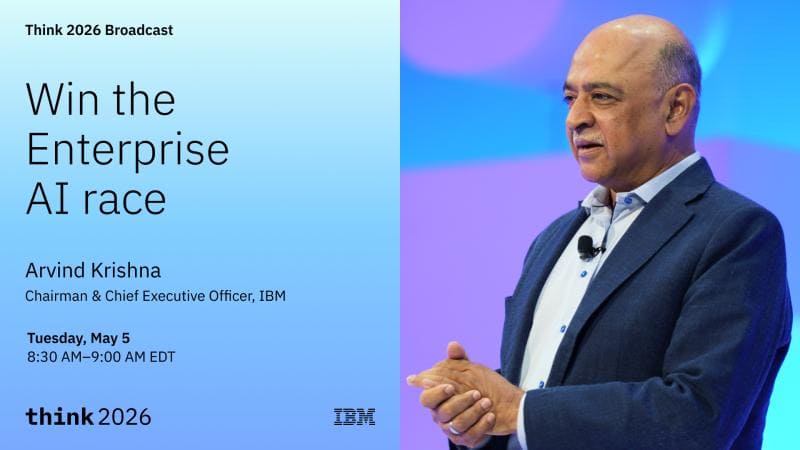
At IBM Think 2026 (Boston, May 5), CEO Arvind Krishna put a date on it: quantum advantage arrives this year — "not 20 years away," he said, not ten, but within 2026 (Constellation Research). IBM's own roadmap is blunter still: community-verified quantum advantage by end-2026, a fault-tolerant machine by 2029 (IBM Quantum blog).
Here's the question that matters for your portfolio: if the milestone is real, who actually captures it?
IBM Think 2026 Keynote: What Krishna Actually Said
Strip the keynote down and three claims survive.
A dated promise. Quantum advantage — a machine solving a problem no classical computer can match — lands in 2026, verified by outside researchers, not by IBM's marketing.
A hedge built in. "Verified by the broader ecosystem" is doing heavy lifting. IBM seeded an open quantum advantage tracker (with Algorithmiq and the Flatiron Institute) precisely so the claim can be tested — or falsified — in public (Decrypt).
Receipts, not slides. IBM, Cleveland Clinic and RIKEN ran the largest-known simulation of biologically meaningful molecules on quantum hardware; Boeing and Allstate presented live use cases (TechTarget).
The tell: IBM is no longer selling "quantum is coming." It's selling "quantum is an engineering problem we are now executing." That reframing is what separates it from the pure-plays.
IBM Quantum Computer: Nighthawk, Starling, and the Quantum-AI Continuum
The hardware backs the talk.
| Milestone | Spec | Timing |
|---|---|---|
| Nighthawk (current) | 120 qubits, 218 tunable couplers, up to ~5,000 two-qubit gates | Early access live since Jan 2026 |
| Nighthawk iterations | 7,500 gates → 10,000 gates | 2026 → 2027 |
| Starling (fault-tolerant) | ~1,000 qubits / ~200 logical qubits / 100M+ gates | 2029 |
| Blue Jay | 2,000 logical qubits / 1B gates | 2033 |
(Sources: Tom's Hardware, Constellation, IBM)
Krishna's framing device is the quantum-AI continuum: quantum uncovers what AI can't compute; AI accelerates the algorithms and workflows that make quantum usable. Translation for investors — quantum is being folded into the AI capex trade, not sold as a standalone bet. NVIDIA's NVQLink and open-source tooling reinforce that bundling.
Commercial use cases on the table today: molecular simulation (pharma, materials), constrained optimization (logistics, finance), and physics modeling. McKinsey pegs the prize at up to $2.7 trillion in global value by 2035 (Foreign Policy Journal) — a number large enough to power a narrative and vague enough to justify almost any multiple.
Why Is Rigetti Computing Stock Going Up? Follow the Government Money
Here's the correction the headlines blurred. RGTI's ~20% single-day pop was not the keynote. It was Washington.
On May 21, 2026, the administration committed roughly $2.013 billion in federal incentives to nine quantum companies under the CHIPS Act — an "Intel-style" model where the government takes equity (TradingKey). The allocation:
| Company | Funding | Reaction |
|---|---|---|
| IBM | $1.0B (matched; builds the Anderon foundry, Albany NY) | Mega-cap re-rate |
| GlobalFoundries | $375M | Gains |
| Rigetti (RGTI) | ~$100M | +20–30% on the day |
| D-Wave (QBTS) | ~$100M | +20–30% on the day |
Rigetti's fundamentals, for context: Q1 2026 revenue ~$4.4M (tripled YoY), net loss ~$26M, ~$400M cash, 108-qubit Cepheus system shipped, a 100+ qubit "Lyra" targeted for late 2026 (FX Leaders). The stock has traded between $10.30 and $58.15 over 52 weeks — a range that tells you exactly how much of this is sentiment, not earnings.
So the surge rests on two legs: policy money and momentum. Neither is revenue. That's not a knock on the technology — it's a statement about what's priced in.
Best Quantum Computing Stocks to Buy in 2026? Watch Where Capital Concentrates
The crowded version of the trade is "quantum advantage 2026 → buy the pure-plays." The June 1 tape suggests the market is already running a different play.
The structural case for IBM as the concentration winner:
| Factor | IBM | Pure-plays (RGTI / IONQ) |
|---|---|---|
| Quantum commitment | $10B over 5 years | Cash burn vs. ~$0.4–3.1B cash |
| Revenue base | Diversified, profitable parent | $4.4M (RGTI) / $64.7M (IONQ) quarterly |
| Foundry control | Owns Anderon — America's first 300mm quantum fab | May need to fab via competitor |
| Verification milestone | Submitting advantage candidates | Yet to post a verified result |
| Valuation | Re-rating from a real earnings base | RGTI ~746x trailing P/S |
The Anderon foundry is the under-discussed lever. A superconducting pure-play that needs 300mm scale may have to buy fabrication from its largest competitor. Trapped-ion players (IonQ, Quantinuum) sidestep that — but they also can't ride IBM's foundry economics.
Two transmission channels investors are underpricing:
Fiscal / policy: the "Intel-style" equity model means the U.S. government is now a shareholder in the sector. That caps downside and political risk — but also caps the clean private-upside story.
Crypto / "Q-Day": every step toward fault tolerance reignites fears for Bitcoin's ECDSA encryption (Decrypt). Fault tolerance by 2029 is the date that matters for post-quantum cryptography — a second-order risk that prices into crypto, cybersecurity, and Treasury-grade infrastructure long before any coin is actually broken.
The Core Call
The 2026 quantum-advantage catalyst is most likely to concentrate value in IBM and the fabrication layer — not in the cash-burning pure-plays whose run has been policy- and momentum-driven. The IBM-vs-pure-play divergence on June 1 is the early tell, not noise.
What this is right about — and the signal that proves it wrong: This holds if capital keeps rotating into IBM and the Anderon foundry becomes a sector chokepoint. It is falsified the moment a pure-play (RGTI or IONQ) posts an independently community-verified quantum advantage result on the open tracker, or starts closing the revenue/multiple gap. Watch the tracker, not the tickers.
What to watch next (priority order):
Independent verification of any 2026 quantum advantage claim on the open tracker — IBM's or a rival's.
Anderon foundry customer announcements — does any pure-play sign on?
RGTI / IONQ Q2 2026 prints — revenue acceleration vs. widening losses.
CHIPS Act equity terms — dilution, governance strings, follow-on tranches.
Rate path / FOMC — these are long-duration, profitless names; yields move them hard.




Bonus rebate to help investors grow in the trading world!