English




RAVE Crypto Crashes 95% in 24 Hours Amid Pump-and-Dump Probe

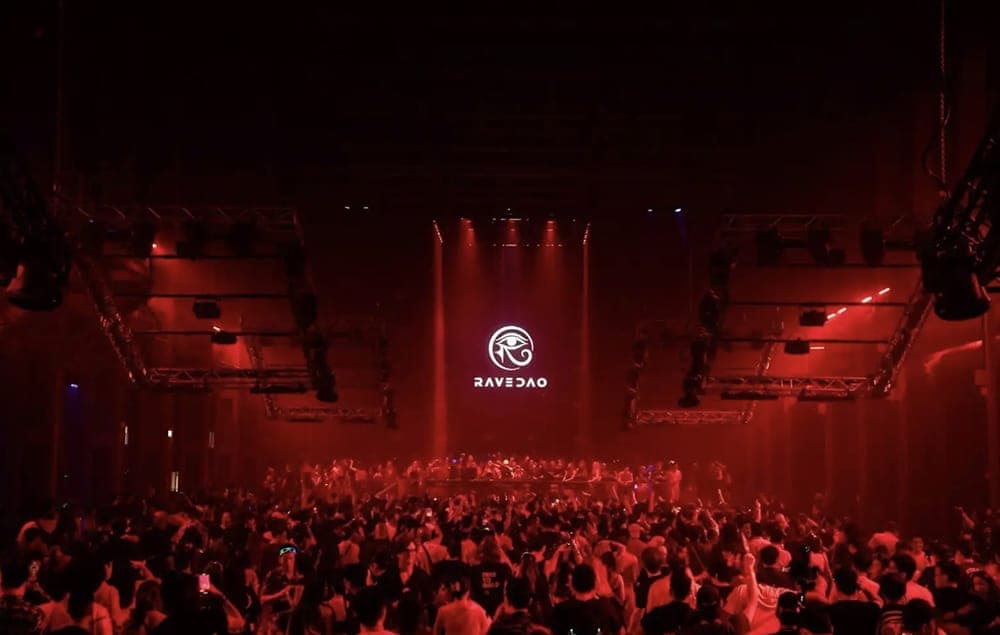
In just nine days, RAVE, the token of Web3 entertainment site RaveDAO, went from being a small crypto to a top-20 asset by market cap. But in just 24 hours, it lost almost all of its value.
It dropped from a high point of $27.33 to $1.56 in just one day, a 95% drop that erased $392 million in market value and caused more than $44 million in liquidations.
There are now inquiries going on at Binance, Bitget, and Gate.io. ZachXBT, an on-chain investigator, says that people inside RaveDAO are running a coordinated pump-and-dump scam. It's also hard to find another way to explain the design that was left on the chain.
The Rise: 10,800% in Nine Days
Even by crypto standards, RAVE's rise was very impressive. In nine days, the token went from about $0.25 to $27.33, a gain of 10,800%.
It entered the top 20 cryptocurrencies by market cap and briefly passed Litecoin and Avalanche in total value. At its peak, the 30-day gain was more than 10,000%.
When a low-liquidity token makes that many moves in a short amount of time, it's not natural market finding. It was necessary for what came next.
The Mechanics: How the Scheme Allegedly Worked
ZachXBT's on-chain analysis found a certain trend of operations. About 90% of all 1 billion RAVE coins were held in three multisignature wallets connected to the team.
This is a distribution system that makes it very easy to change prices in a meaningful way. Then, a few million tokens were moved to exchanges right before the price spike. Analysts on the blockchain said this was planned and organized.
Analysts call the pattern that formed "throwing bait and then liquidating": large transfers of tokens to exchanges that signal incoming selling pressure cause short positions to grow. As a result, the price spikes sharply when the expected supply moves out of position, forcing short sellers to liquidate.
A total of $44 million was lost on April 18. This was one of the biggest single-day losses in all crypto assets besides Bitcoin and Ethereum, and most of it came from short positions that got stuck in the squeeze.
As soon as the sale cascade was over, the sell pressure that had been holding back came through, and the token fell apart. ZachXBT said that there were $30 million in liquidations in his first report, but CoinDesk says there were $44 million. This is because they used different time frames to measure the same event.
Exchange Response and RaveDAO's Non-Answer
As revealed by Bitget CEO Gracy Chen, the exchange had begun an investigation. Richard Teng, co-CEO of Binance, said that the exchange would look for signs of market abuse all the time. Gate.io was also linked to the trading behavior that was being looked into.
What RaveDAO didn't say in its answer to X stood out. The team denied having anything to do with recent price changes and took no responsibility.
However, they did not give any specific answers to the on-chain proof ZachXBT had made public. The project called itself a Web3 entertainment platform that offered on-chain tickets for electronic music events.
It said it started in Istanbul in 2023 and made around $3 million in 2025. It was said that unlocked tokens would be sold to raise money for operating and marketing costs, and a lock-up model was being thought about, but no details or a timeline were given.
If the team didn't have anything to hide, they would have gone straight to the wallet concentration data and pre-spike exchange transfer time. The fact that answer didn't come is itself instructive.
What This Exposes About Low-Liquidity Token Risk
It's easy to see how low-liquidity tokens can be used as weapons after the RAVE crash. When a small group of wallets controls most of the supply, price is not set by the market; it is set by people who are inside the market.
The retail momentum caused by hype that followed the initial surge gave the scheme the exit liquidity it needed. The damage was already done by the time the exchanges started their reviews. Retail traders who bought into the rally at $10, $15, or $20 now have tokens worth $1.56.
ZachXBT has offered a reward for people who blow the whistle on the exchange. This could lead to more on-chain proof as the investigations continue. Whether the investigations lead to formal actions like delistings, frozen accounts, or regulatory referrals will decide whether RAVE is a case that sets a new standard for enforcement or just another cautionary tale.
No matter how much you pay, you can't invest in RAVE until the exchange's investigations are over and the wallet concentration structure is checked by a third party.
The main lesson is about structure: tokens where insiders control 90% of supply should be seen as suspicious right away, no matter how good the story is or where they are listed on an exchange.
ZachXBT's method, which includes keeping an eye on wallet movements, timing correlations, and supply concentration ratios, is the due diligence strategy that regular people should use before investing in low-liquidity assets, not after the crash.


Bonus rebate to help investors grow in the trading world!