English




Samsung-Nvidia Chiefs Meet on HBM4E, HBM5 as Foundry Collaboration Deepens

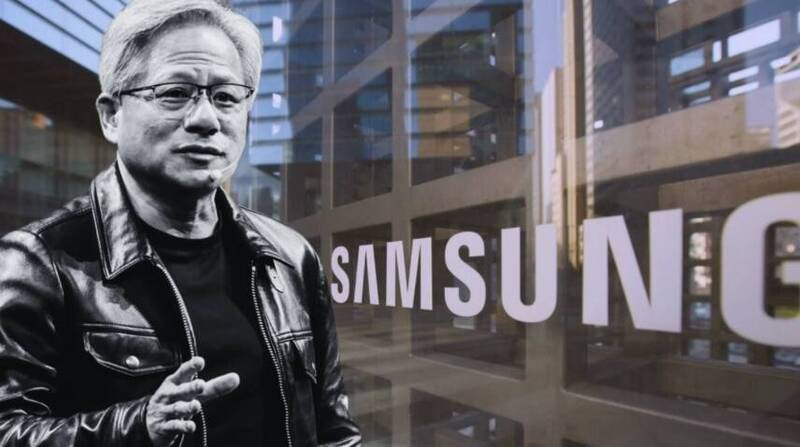
Samsung Electronics co-CEO Jun Young-hyun met with Nvidia CEO Jensen Huang in Seoul on Monday, discussing cooperation on next-generation foundry chips and long-term HBM collaboration. The two companies are already working together on autonomous driving chips and Groq AI accelerator chips. Jun said they had "extensive discussions on long-term cooperation, including in HBM 4E and HBM5."
The meeting comes as Huang tours Korea to meet industry leaders and explore broader cooperation across the AI ecosystem. Samsung is pushing to strengthen its position in the rapidly growing HBM market, where demand is driven by AI data center expansion and increasingly powerful AI models.
What They Discussed: From Groq LP30 to HBM5
The collaboration is already active. In March, Huang unveiled Nvidia's new AI inference processor based on Groq technology, adding that Samsung would manufacture Groq's LP30 chips — scheduled for shipment in the second half of this year. That foundry relationship is the foundation for deeper partnership.
HBM chips — advanced memory semiconductors that work alongside AI processors — were the core focus. Jun said Samsung will "make efforts to supply sufficient HBM4 products to Nvidia" in the shorter term. The longer-term agenda: HBM4E and HBM5, the next generations of high-bandwidth memory that will power future AI accelerators.
The foundry business was also on the table. Samsung and Nvidia discussed "cooperation on future generations of semiconductor products" beyond the current Groq arrangement.
The SK Hynix Shadow: Rivalry for Nvidia's Memory Business
The meeting carries competitive weight. SK hynix — Samsung's Korean rival — has been Nvidia's dominant HBM partner, recently becoming Asia's third trillion-dollar company on the strength of that relationship. Huang previously remarked that SK hynix will remain Nvidia's biggest memory partner.
Jun's response was measured: "We will work hard on what we do and prove it with results." The message is clear. Samsung is not conceding the HBM market to SK hynix. It is betting that HBM4E and HBM5 development — plus foundry capabilities — can win back share.
Samsung's device solutions division oversees both memory and foundry operations. The integrated structure lets Samsung offer Nvidia HBM + foundry packages that SK hynix — a pure-play memory company — cannot match. That bundling advantage is the strategic bet.
HBM4 is the near-term product Samsung must deliver to Nvidia. The "sufficient supply" commitment from Jun is the baseline. Failure to execute on HBM4 means no seat at the HBM4E/HBM5 table.
HBM4E and HBM5 are the long-term prizes. These next-gen memory standards will define the 2027-2028 AI accelerator cycle. Samsung's foundry collaboration on Groq LP30 is the proof point that it can manufacture advanced AI chips. Extending that to Nvidia's own designs is the upside scenario.
SK hynix's trillion-dollar valuation is the competitive benchmark. Samsung's memory business has trailed its rival in HBM market share. The Jun-Huang meeting is the signal that Samsung is prioritizing the Nvidia relationship. Results — not meetings — will determine whether the gap closes.
The Groq LP30 shipment in H2 is the trade's clock. Watch whether Samsung's foundry yields meet expectations. A smooth ramp builds credibility for larger Nvidia foundry contracts. A troubled ramp validates SK hynix's dominance.
The HBM race is a two-horse contest in Korea. Samsung wants to prove it belongs in the same conversation.


Bonus rebate to help investors grow in the trading world!