English




SNDK Stock 2026: SanDisk's 4,000% Run and What Comes Next

On June 12, 2026, SanDisk Corporation (NASDAQ: SNDK) closed at $1,980.10, up 5.24% on the day, after touching an intraday all-time high of $2,021.65. For context: the stock priced its IPO at approximately $38.50 per share when it spun out of Western Digital in February 2025. That's a return of roughly 4,000% in approximately 16 months — making SNDK one of the most aggressive price appreciation stories in recent semiconductor market history.
The obvious question isn't whether the move has been extraordinary. It has. The question is whether the $29.3 billion market cap and a trailing P/E of 68.83x reflect AI infrastructure reality or a valuation that has run ahead of even a genuinely strong fundamental story.
The Business Case: AI Data Centers Are Consuming NAND at a Rate Few Anticipated
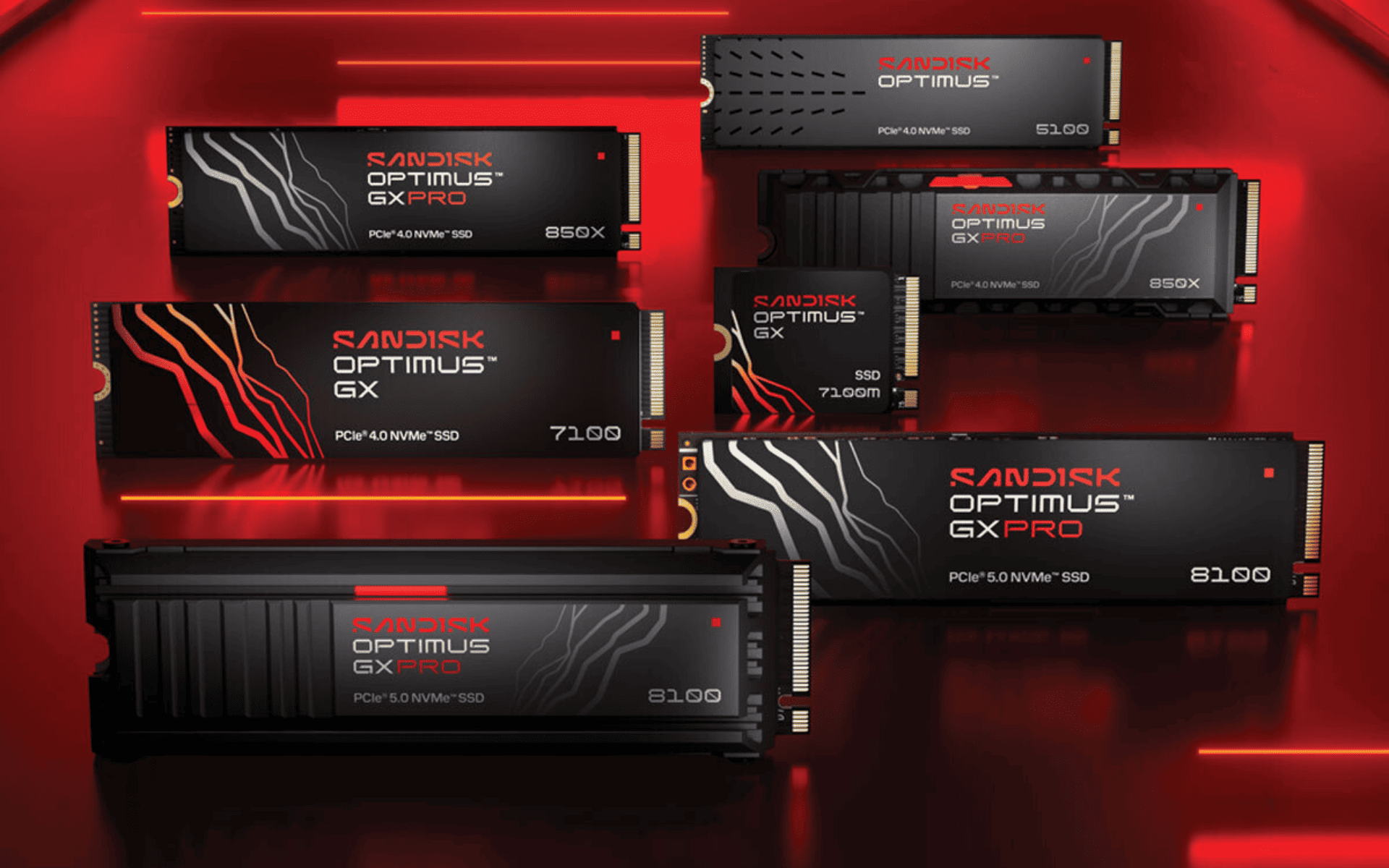
SanDisk's core product — NAND flash storage and enterprise SSDs — sits at a critical chokepoint in AI infrastructure buildout. Training large language models and running inference workloads at scale requires massive, fast, persistent storage. Hyperscalers including Microsoft and Google have been expanding data center capacity at a pace that has overwhelmed available NAND supply, and SanDisk, as one of the few large-scale independent NAND producers following its Western Digital spinoff, is capturing a disproportionate share of that demand.
The Q3 FY2026 results make the underlying trend hard to dispute. Revenue came in at $5.95 billion, up 251% year-over-year. Data center sales specifically grew 233%. Gross margin reached 78.4% — a figure more typical of software companies than hardware manufacturers, and a direct reflection of the pricing power that supply-demand imbalance creates. The company has stated that its 2026 production capacity is fully sold out, with 2027 bookings already described as strong. Reported new contracts total at least $42 billion.
Nvidia CEO Jensen Huang's public comments forecasting a "multi-year silicon shortage" have reinforced the demand narrative. When the world's dominant AI chip company signals that compute and storage buildout will remain constrained for years, it functions as a demand guarantee for the companies supplying the infrastructure layer.
What Analysts Are Pricing In — and Where They Diverge
Wall Street's price target dispersion on SNDK is itself informative. Bank of America has set a target of $2,100. Mizuho is at $2,200. Cantor Fitzgerald has gone to $2,900. The range reflects genuine disagreement about how long the current supply-demand dislocation persists and whether SanDisk can maintain pricing power once new NAND capacity comes online — likely in 2027 or later.
The bull case is straightforward: AI capital expenditure from hyperscalers shows no signs of slowing, NAND supply additions require 18–24 months of lead time, and SanDisk is locked into long-term contracts that provide revenue visibility unusual for a semiconductor company. At a $2,900 target, analysts are essentially arguing that the current cycle is structurally longer than historical memory chip cycles because the demand source — AI infrastructure — is not consumer-driven and therefore not subject to the same inventory correction dynamics.
The bear case centers on cyclicality and valuation compression risk. The memory chip industry has historically been one of the most volatile in semiconductors, prone to sharp oversupply cycles when manufacturers add capacity simultaneously in response to high prices. Samsung and Micron are both expanding NAND production. If supply catches demand faster than the bull case assumes, gross margins could compress significantly — and a stock trading at nearly 69x trailing earnings has very little cushion for a margin miss. The RSI has flagged overbought conditions at various points in the recent run, and any deceleration in hyperscaler capex guidance could trigger a sharp drawdown.
SNDK's Relationship to the Meme Stock Ecosystem
SNDK occupies an unusual position in current market discourse. Unlike GameStop or AMC, its fundamental story is real and quantifiable: actual revenue, actual margin expansion, actual contract backlog. But the magnitude and velocity of its price appreciation has attracted retail momentum trading that mirrors meme stock dynamics — high short-term options activity, social media amplification, and a narrative that has become self-reinforcing.
This distinction matters for risk management. A company whose rally is driven 80% by fundamentals and 20% by momentum can still experience a momentum-driven correction of 30–40% without the underlying business deteriorating at all. The fundamental thesis remains intact; the multiple contracts. Traders treating SNDK as a momentum vehicle and investors treating it as a structural AI infrastructure holding need different exit frameworks.
The next earnings report is expected around August 2026, which will be the first major fundamental checkpoint after the stock's push above $2,000.
FAQ
Q1: What is SanDisk (SNDK) and why did it separate from Western Digital?
A1: SanDisk Corporation is the former flash storage division of Western Digital, spun off as an independent public company on NASDAQ in February 2025 at approximately $38.50 per share. The separation was intended to allow the NAND flash business to pursue its own capital structure and growth strategy distinct from Western Digital's hard disk drive operations.
Q2: Is SNDK a good long-term investment or primarily a momentum trade?
A2: SNDK has a genuine fundamental driver in AI data center storage demand, with 251% year-over-year revenue growth and sold-out 2026 capacity. However, a trailing P/E above 68x and the historical cyclicality of NAND markets mean valuation risk is significant. Long-term investors should monitor hyperscaler capex trends, competitor capacity additions from Samsung and Micron, and gross margin trajectory heading into 2027.




Bonus rebate to help investors grow in the trading world!