English




SpaceX Stock 2026: A $2.4 Trillion Orbit and What Could Pull It Back to Earth

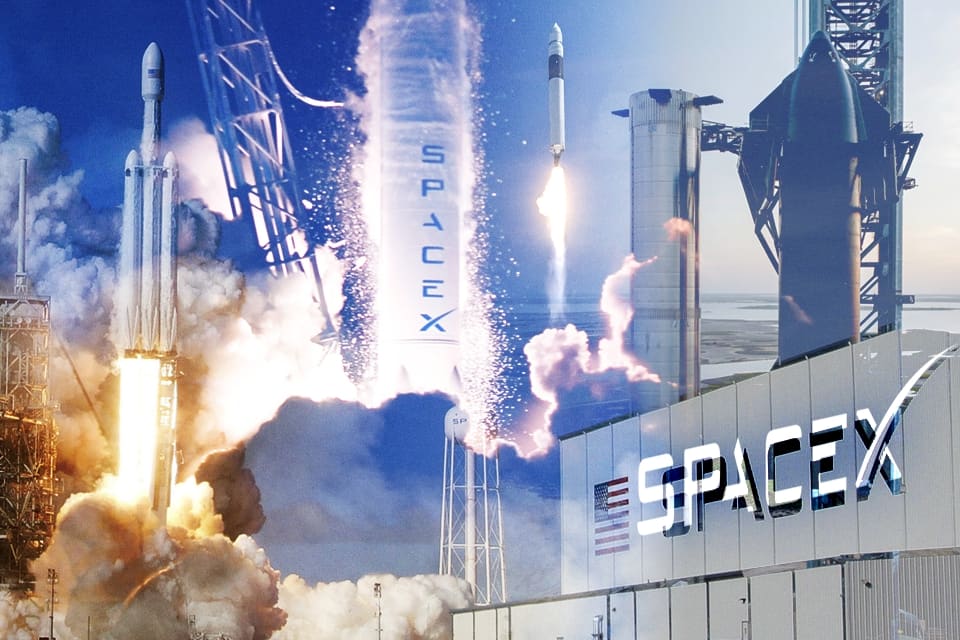
What actually happened on SpaceX's first full trading day?
SpaceX (NASDAQ: SPCX) closed Monday up 19.6% — following a 19.2% debut on Friday — with shares touching an intraday high of $188.80 and settling around $185.24, putting market cap at approximately $2.42–$2.5 trillion.
That places SpaceX sixth in U.S. market cap rankings, just behind Amazon's $2.65 trillion. The company simultaneously confirmed that underwriters exercised their full over-allotment option, bringing total IPO proceeds to $85.7 billion — up from the $74.4 billion initially raised and nearly three times Saudi Aramco's 2019 record of $29 billion.
Retail investors, per Vanda Research, secured roughly 20% of the IPO allocation and made net purchases of $117.6 million on debut day — a first-day retail buying record surpassing Coinbase's April 2021 listing.
One side effect of the listing: Elon Musk, 54, became the world's first trillionaire.
Why is the stock up 40% from IPO in two days?
Three structural forces are compressing the float and amplifying upside moves simultaneously.
First, the low public float in SpaceX's early trading days means relatively small dollar volumes can produce outsized percentage moves — there simply aren't that many shares available to absorb demand.
Second, SpaceX will be included in the Nasdaq 100 Index just 15 trading days after listing, which creates a mandatory buying event from passive index funds regardless of fundamental view.
Third, the Iran peace deal announced Sunday sent global risk assets higher across the board — Matt Kennedy at Renaissance Capital noted the macro tailwind explicitly, though he was careful to separate it from SpaceX-specific factors.
Wall Street is also repricing SpaceX's identity. The company's core business is aerospace and satellite communications, but the February acquisition of xAI — and the $1.25 billion per month Anthropic compute contract — has led investors to treat it as a proxy AI infrastructure play. Richard Hunter at interactive investor called the xAI integration the primary amplifier of growth expectations.
Is $2.5 trillion a defensible valuation?
The fundamental case requires a significant suspension of current numbers. SpaceX reported $18.7 billion in revenue in 2025, up 33% year-over-year, but also disclosed a loss of $4.9 billion — against a $791 million profit in 2024 — as AI-related expenditures accelerated following the xAI merger. At $2.5 trillion market cap, SpaceX is trading at roughly 134x revenue on a loss-making business.
Morningstar analyst Nicolas Owens put a $63 fair value on the stock at the $135 IPO price, which he already called "significantly overvalued." At current prices above $185, the gap between Morningstar's intrinsic value and the trading price has widened further.
Owens's specific concern: "significant uncertainty regarding the development path of the company's AI business" and a "clear economic moat has yet to be established" — with AI potentially representing "a significant risk of value destruction."
Musk's own Sunday post on X projected SpaceX reaching $1 trillion in revenue by 2030 or 2031 — a roughly 53x increase from 2025 levels in five to six years. He offered no model for the projection. Kennedy at Renaissance Capital framed the consequence plainly: the stock is "priced to near perfection," and he expected it to trade below its IPO price at some point.
What's the actual SpaceX business beneath the AI narrative?
The underlying company has three real revenue engines. Starlink generates subscription revenue from satellite internet and is growing. Launch services, including NASA contracts and commercial payloads, provide durable institutional revenue.
And xAI compute, through the Colossus data centres now under the SpaceX umbrella, generated the $1.25 billion monthly Anthropic contract. Total 2025 revenue of $18.7 billion is genuine — but the path from $18.7 billion to Musk's $1 trillion target requires Starlink scaling to hundreds of millions of subscribers, Starship reaching routine commercial launch cadence, and xAI monetising orbital compute at a pace that has no comparable precedent.
FAQ
What did SpaceX's IPO raise in total? $85.7 billion after the over-allotment option was exercised — the largest IPO in history.
What is Morningstar's fair value for SPCX? $63 per share, implying the stock is trading at roughly 3x what Morningstar considers intrinsic value even at the $135 IPO price.
When does SpaceX join the Nasdaq 100? 15 trading days after listing — creating a passive-fund buying event that will support near-term price action.
Did SpaceX make money last year? No — it reported a $4.9 billion loss in 2025, reversing a $791 million profit in 2024, due to AI infrastructure spending.
What's the primary risk? Kennedy's framing is the clearest: "priced to near perfection" with "little scope for slip-ups." Any miss in Starlink subscriber growth, Starship launch cadence, or xAI revenue ramp could trigger a correction from a base where virtually all good news is already priced.


Bonus rebate to help investors grow in the trading world!