English




Tesla AI6.5 Chip Rumor Puts Intel in Play Against TSMC

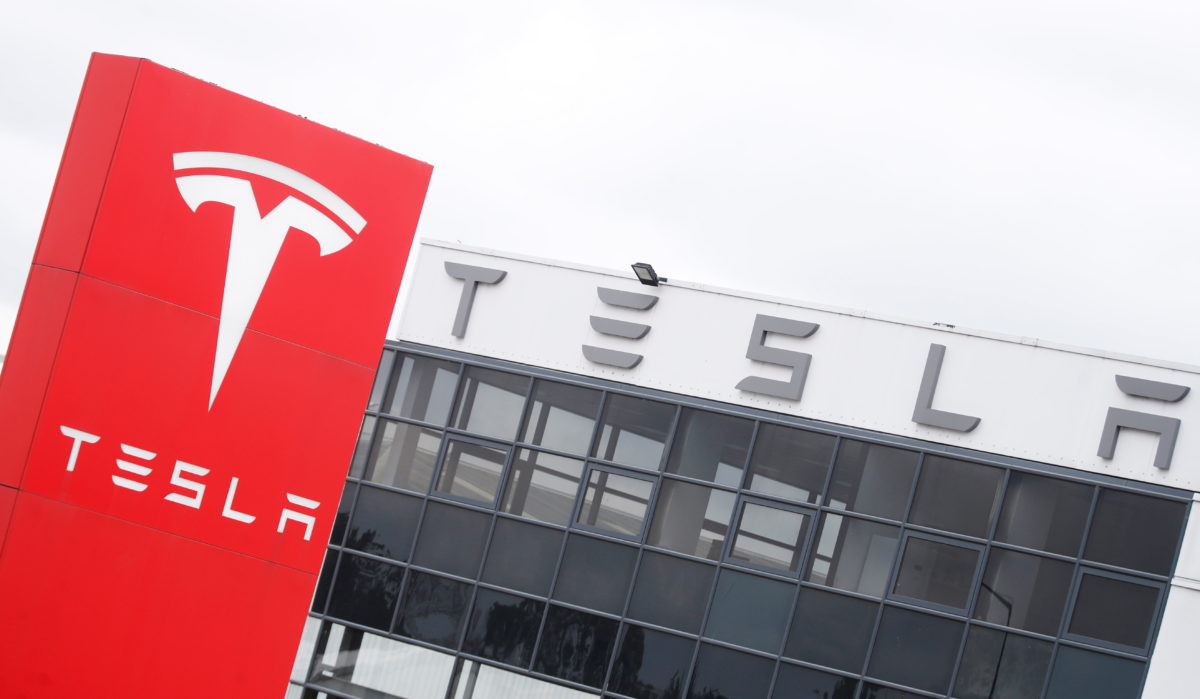
There was a post on Weibo that caused waves in the semiconductor business. Some people think that Tesla may move some of the production of its next-generation AI6.5 chips from TSMC to Intel, reportedly because the Trump administration is pressuring the company to do so. Tesla, Intel, TSMC, and the U.S. government have all denied that they have made such a deal. The phrase "AI6.5" doesn't have any official product documentation, public specs, or confirmed release date. Take this rumour at face value.
However, the buzz it has caused is real, and knowing why it's happening can tell you more about the future of making advanced AI chips than the rumour itself.
What Is Actually Confirmed
Before engaging with the speculation, it helps to anchor the analysis in verified facts.
Tesla's AI5 chip, which is called "Helios" inside the company, is currently made by TSMC and Samsung. In July 2025, Reuters announced that Tesla and Samsung had agreed to buy the AI6 chip for $16.5 billion. The chip would be made at Samsung's plant in Taylor, Texas. Elon Musk stated at the time that the AI6 chip would be made at Samsung's factory in Texas. The chip was described as "inference hardware" for self-driving cars, Optimus robots, and possibly more general AI uses like data center workloads. There is proof of that deal. It is not in question.
The rumour around AI6.5 chips has no confirmed product specs, no confirmed manufacturing partner, no publicised timeline, and no official Tesla comment. The information going around about LPDDR6 memory, SRAM ratios, and reticle sizes comes from the same social media site as the foundry rumour and should not be taken as fact.
Why This Rumour Has Unusual Resonance
Usually, unconfirmed posts on Weibo don't get the attention of people in the semiconductor business. This one does because it falls in the middle of four big trends at the same time.
Tesla's plans for AI tech have grown beyond cars. AI4 drives the FSD hardware we have now. The AI5 and AI6 platforms are not add-ons for vehicles; they are part of a larger stack that includes vehicles, robotics, data centers, and AI compute tied to Dojo. The manufacturing question becomes more of a strategic one rather than a supplier selection task as the goal gets bigger.
The foundry business at Intel needs external users right away. Intel is pushing the 18A node and the upcoming 14A node as alternatives to TSMC. On the 14A roadmap, RibbonFET transistors, PowerVia backside power transfer, and High-NA EUV are some of the features that Intel is promoting.
The 18A yield question is still open. According to Reuters, at one point, only a small percentage of chips made on 18A met customer standards, but Intel says that number is improving every month. A Tesla AI6.5 order would not only bring in money, but it would also be a sign of trustworthiness that Intel Foundry hasn't been able to achieve on a large scale.
A preliminary agreement between Apple and Intel, which was revealed last week, is one step in that direction. A relationship between Tesla and Apple would be another.
The U.S. industrial policy is constantly changing the locations of foundries. The building for TSMC is in Arizona. Samsung has put money into Texas. Intel is trying to make its U.S. foundry a vital asset for the country.
In this political climate, a Weibo claim that the Trump administration is trying to get Tesla to move chip production to Intel doesn't seem too far-fetched, even though it hasn't been proven. The rules for advanced AI chips used in self-driving cars and robots are different from those for other technology. These chips are now seen as important national infrastructure.
Because TSMC is so dominant, there is structural push to diversify. TSMC has about 67% of the advanced logic processor market, while Samsung has about 8%. Any sign that a big customer of AI chips is moving production somewhere else is given a lot of attention because concentration itself makes diversification interesting.
What a Tesla-Intel Arrangement Would Actually Require
It's scary to think about what would happen if the Trump administration pushed for a deal with Intel and Tesla agreed. Changing the foundry where an advanced AI inference chip is made is not the same as switching suppliers; it is a rethink. Tesla's whole AI stack relies on a chip that needs to be re-engineered because of changes in manufacturing technologies, design rules, process design kits, timing libraries, and yield characteristics. That's a huge engineering project that takes years, not quarters, to finish for a big inference accelerator used in robots and self-driving cars.
It makes more sense to use more than one source, like sharing production of AI6.5 between Intel and Samsung. This is because it makes more sense than to completely switch from TSMC to Intel. Multi-sourcing cuts down on foundry dependence and fits with the political need for making things in the United States. But "same software, slightly different physical versions" means a lot of work needs to be done to integrate the software, which makes the program a lot more complicated.
Why the Story Matters Even If the Rumour Is Wrong
The most important and honest observation in the available research is that the specific Weibo hint shows the direction the market is going, even if it turns out to be false in the end.
Today, choices about foundries that make advanced AI chips are not just small parts of the supply chain; they are major geopolitical events. If Tesla, Intel, TSMC, and the White House are all mentioned in the same rumour at the same time, it's because they all have good reasons to act the way the rumour says they will. That the incentives are aligned is a signal in and of itself, even if the deal doesn't happen.
Any big AI chip customer for Intel proves the foundry theory and brings in more outside design starts. Adding more manufacturing capacity in the U.S. lowers Tesla's concentration risk and improves political ties that are important for getting FSD and robotics deployments approved by regulators. For TSMC and Samsung, it's a warning that where to put advanced AI hardware is being determined by politics and location more than by yield, performance, and wafer cost.
As of now, AI6.5 is not guaranteed until Tesla or a manufacturing partner makes a formal announcement. The $16.5 billion deal between Samsung and Tesla for AI6 in Taylor, Texas, and Intel's preliminary agreement with Apple's foundry are two pieces of evidence that support a story about the geography of U.S. semiconductor production that doesn't need an unverified Weibo post to make sense.
For the confirmed signals, keep an eye on Tesla's next hardware announcements, Intel's foundry customer disclosures, and any U.S. government comments on making AI chips in the U.S. The sound of the rumour is real, but its contents have not been proven.


Bonus rebate to help investors grow in the trading world!