English




TSMC April Revenue Jumps 17.5% to $13.1B on Sustained AI Chip Demand

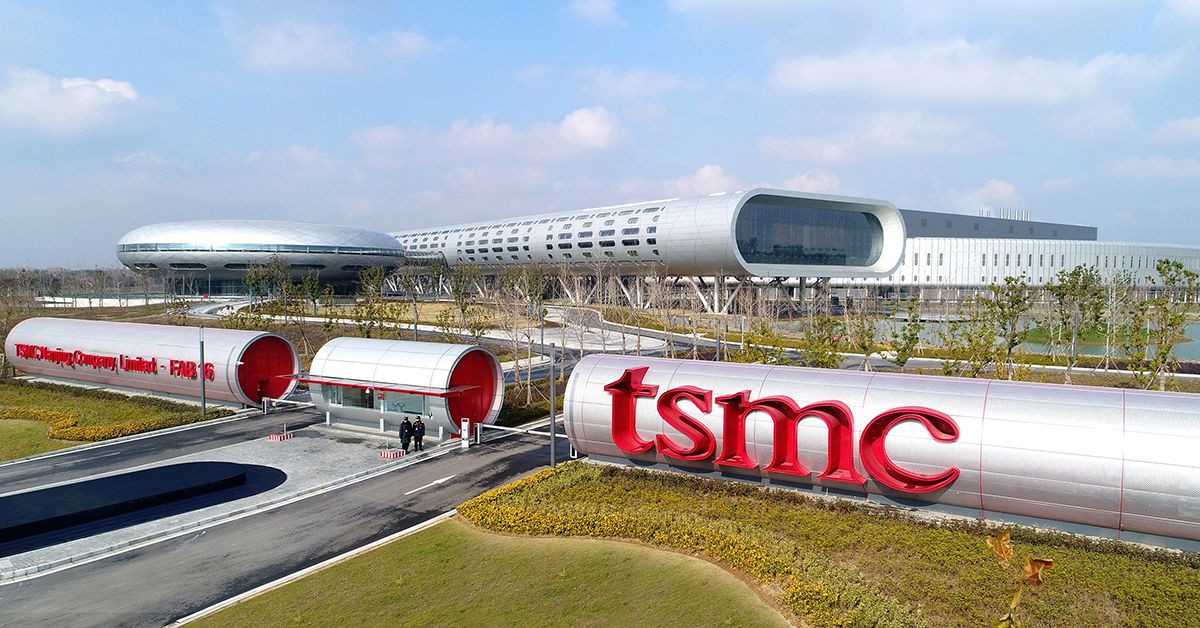
On Friday, Taiwan Semiconductor Manufacturing Co (NYSE: TSM / TW: 2330) posted April sales of NT$410.73 billion ($13.1 billion), up 17.5% year-over-year from NT$349.57 billion in April 2025.
This shows that demand for AI chips is still strong going into Q2. From March's NT$415.19 billion in sales, only 1.1% less was made, which is a drop that is more likely due to normal seasonal trends than a drop in demand.
The total income for the first four months of 2026 was NT$1.544 trillion, which is up 29.9% year-over-year. This is one of the clearest signs that the buildout of AI infrastructure is continuing to drive large-scale demand for advanced semiconductors.
The AI Infrastructure Engine Keeps Running
The semiconductor industry's best way to figure out how much demand there is for AI chips right now is to look at TSMC's sales growth. As the biggest contract chipmaker in the world and the main maker of chips for Nvidia, Apple, and AMD—the three companies that gain the most from spending on AI infrastructure—TSMC's monthly revenue numbers are based on actual wafer starts, not predictions or guidance.
April's 17.5% year-over-year growth comes after a record-high profit in Q1 2026 and with TSMC predicting sales of $39–$40.2 billion in Q2, which is a big jump from Q1's $35.9 billion. The sequential guidance suggests that growth will speed up in Q2 instead of slowing down, which is supported by the April monthly numbers. If April's $13.1 billion annualises at a rate similar to the midpoint of TSMC's Q2 estimate, the company is on track to meet or beat its own prediction.
The main area of growth is still high-performance computing, which includes AI accelerators, data center chips, and the advanced silicon that runs GPU and CPU tasks. Around $700 billion will be spent on capital by hyperscalers around the world in 2026. This will directly translate into wafer demand at TSMC's advanced nodes, where the company has manufacturing benefits that no other company has been able to copy on a commercial scale.
Record High Shares and the Regulatory Catalyst
Last month, TSMC shares hit a record high after Taiwanese financial regulators loosened rules on single-stock portfolio concentration. This allowed domestic fund managers to invest more in the company than they could before. Instead of a fundamental change, that legal change caused a positioning-driven re-rating that reflects existing institutional demand that had been structurally limited.
The stock is in a good technical and fundamental position because it has record earnings, record sales, and a regulatory unlock that lets more domestic investors in. On the day of the revenue report, Taipei-listed shares traded 0.9% lower at NT$2,290. This was a small drop that was probably caused by people taking profits after the previous month's record run, not a reevaluation of the underlying path.
The Geopolitical Watch: U.S.-China Restrictions and Supply Chain Risk
The problem that keeps getting in the way of TSMC's investment case is political, not technical. The U.S. and China still have limits on exporting advanced chips and equipment used to make chips to China.
These limits create a two-way risk: they make it harder for TSMC to reach some customers, and they also make it easier for Chinese foundries that can't get the most advanced equipment to compete. So far, the net effect on TSMC's business has been good, as demand from AI customers outside of China has more than made up for any lost revenue from Chinese semiconductors.
Policymakers and investors are still interested in supply chain concentration risk, especially the fact that most of the world's most advanced chip manufacturing takes place in Taiwan. TSMC's moves into Arizona (N2 and N3 nodes), Japan (Kumamoto), and maybe even Europe are part of a plan to spread out its manufacturing operations across a wider area. However, it will take a few years for these new factories to reach the same level of size and technology as Taiwan's factories.
TSMC's April revenue report shows that the Q2 guidance path can be reached. For TSMC, 29.9% annualised revenue growth over four months is not just a fluke due to comparisons; it's structural AI demand turning into wafer starts at the world's most advanced manufacturer. The next big step is the $39–$40.2 billion Q2 forecast.
If you do better than that range, it means that the AI infrastructure capex cycle is moving faster than the current accepted models. The main thing that keeps TSMC from trading at a higher price than its operational factors is the geopolitical dimension, which includes U.S.-China restrictions, Taiwan risk, and supply chain diversification.
As long as the discount stays the same, TSMC will continue to offer exposure to AI infrastructure with a global risk haircut built in.


Bonus rebate to help investors grow in the trading world!