English




USD/JPY Holds 159.40 as 160 Intervention Risk Caps Dollar Upside

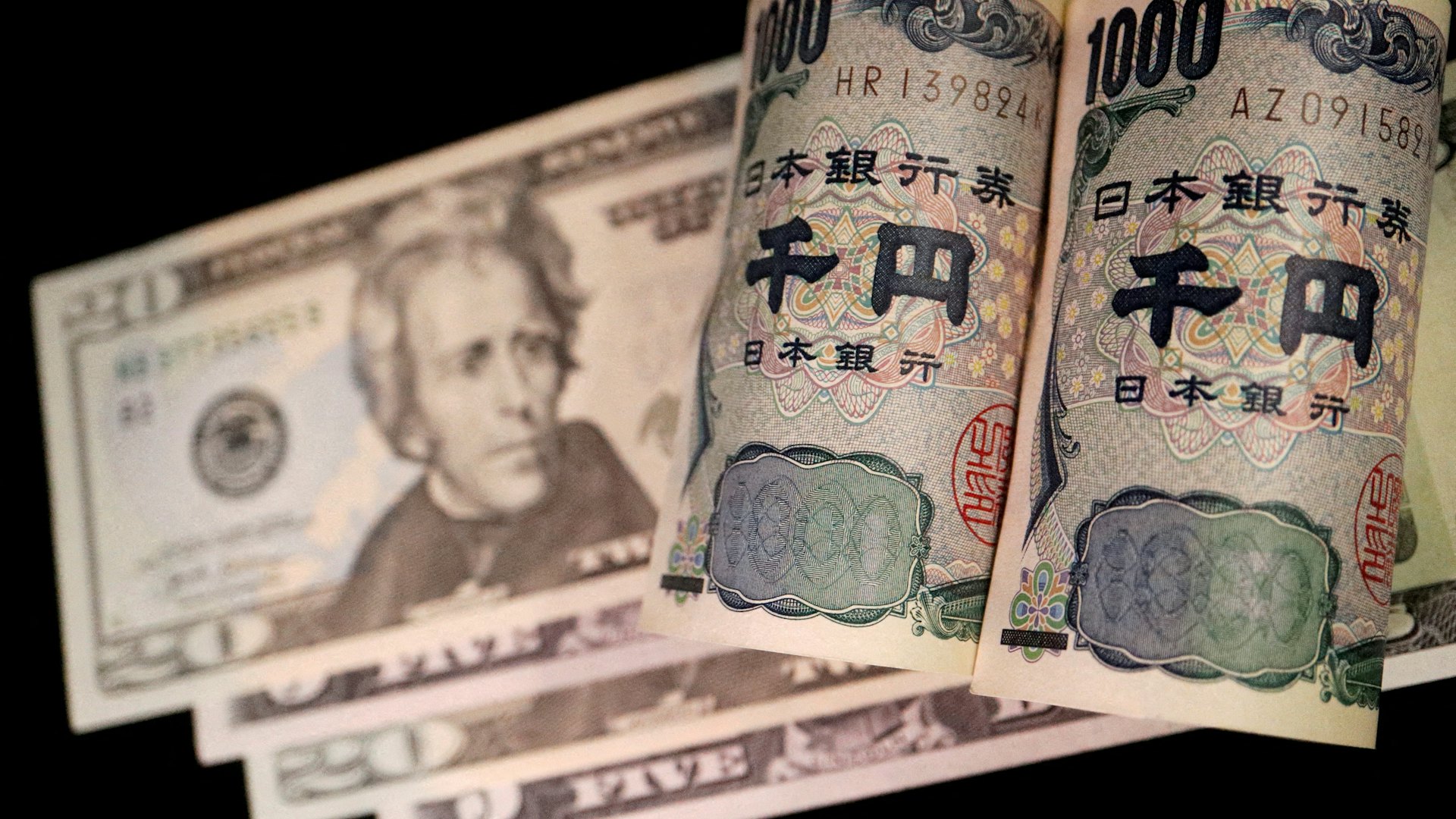
Monday, USD/JPY is staying stable in the 159.30–159.50 band. The pair is showing the most important feature of this session: a dollar that is structurally supported meeting a strongly defended ceiling. Position squaring and intervention jitters stop the advance every time it tries to reach 160, and the underlying rate differential won't let the pair go back in a major way.
In Tokyo, the trading range in the morning was small, from 159.30 to 159.43. However, it gradually grew wider as WTI crude oil prices rose toward $90 per barrel and U.S. 10-year Treasury yields went up, briefly pushing the pair toward 159.50.
What's Keeping the Dollar Supported
The fundamental case for a higher USD/JPY rests on two reinforcing pillars that are not resolving in the near term.
The Fed's limit was confirmed by U.S. PCE statistics. The headline PCE rose 3.8% year-over-year in April, which was the highest level since May 2023. The core PCE rose 3.3% year-over-year with a 0.2% monthly gain, which was less than March's 0.3% gain but still well above the Fed's 2% goal.
The numbers show that early Fed rate cuts are structurally impossible. As long as the market can't figure out how much aggressive Fed easing will cost, U.S. dollar yields will remain attractive, and the difference in interest rates between the U.S. and Japan will remain firmly in favor of the buck.
The BoJ is still limited in how quickly things can return to normal. While the BoJ kept its short-term interest rate at 0.75% at its meeting on April 28, 3 of the 9 board members who were there wanted to raise it to 1.0%. That disagreement shows that people inside the Bank of Japan are still leaning toward raising interest rates, but at a much slower rate than in the U.S. Japan's policy path can't close the rate differential fast enough to fix the yen's underlying weakness, even if the BoJ sends hawkish signals.
Why 160 Is a High-Risk Zone, Not Just a Round Number
The 160 level isn't just a psychological stopping point; it has a past of intervention that the market is actively pricing. Japan's Ministry of Finance says that the country bought yen for about 11.7 trillion yen ($73 billion) to protect the exchange rate during actions in late April and late May.
Previous rounds of involvement caused sharp short-term drops in the USDJPY, showing that the market is still very worried that the Japanese government might step in when the pair gets close to or breaks above 160.
A source in the Tokyo market explained the positioning: "Breaking through the 160-yen threshold needs a meaningful catalyst." Since U.S. rate hikes are happening slowly right now and there are a lot of worries about possible action, the pair is likely to stay in the 159 range for a while.
As the pair gets closer to 160, the result is a risk profile with two sides. When people try to go up, they face profit-taking pressure and the risk of verbal action. But the underlying rate difference keeps the yen from recovering in a real way. The pair is basically stuck in a range. Intervention risk keeps it below the ceiling, and the underlying rate story keeps it above it.
The Cross-Rate Picture
In cross-yen trading, EUR/JPY showed strong downside resistance around the 185.70 mark. This was due to USD/JPY's underlying strength, which kept it from falling even as EUR/USD fell toward $1.1640 as expectations of an ECB rate hike faded. The weak economy in the Eurozone has made people more sure that the ECB doesn't have much policy room. This has kept EUR/USD in the lower half of the $1.16 range and stopped EUR/JPY from going up.
The Catalyst That Could Break the Range
The U.S. jobs report this week is the piece of data that has the most potential to change the direction of USD/JPY. A much stronger-than-expected jobs report would support the Fed's story that rates will stay high for longer. This could push the pair above 159.50 and toward 160, giving traders a chance to see how the Japanese government reacts.
If the report is weaker than predicted or there are signs that the job market is slowing down, the Fed may loosen their grip on the pair, letting it go back to the 158–158.50 range as the dollar bid falls.
In that case, the chance of intervention goes both ways. If the payroll report is good and the USD/JPY goes above 160 on momentum, the Japanese government would have to decide whether to let the yen stay weak or step in again, which would have consequences for their credibility and their budget.
In the range of 159.40 to 159.50, USD/JPY is a range move with an uneven risk profile. The price can only go up to 160 because there is a real and known risk of intervention. To make a clean break above 160 that holds, the price would have to go over $73 billion in recent intervention precedent, which is likely to lead to an immediate policy reaction.
The big rate difference between the U.S. and Japan and the Fed's efforts to keep inflation low both support the downside. Until the employment report gives us a reason to move in a certain way, we can expect prices to stay stable in the 158.80–159.80 range, with more position changes happening as we get closer to either boundary.


Bonus rebate to help investors grow in the trading world!