English




Trump Rejects Iran's Peace Offer — Oil Jumps 3.4% to $104

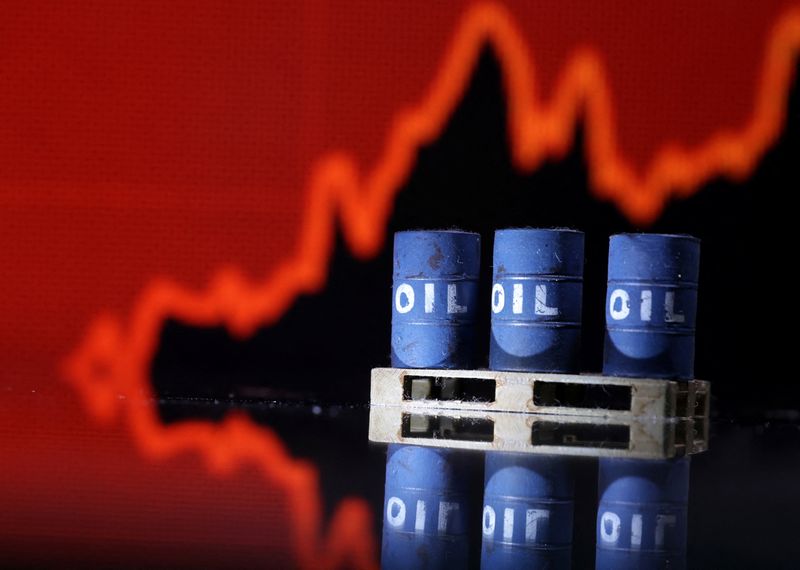
Brent crude jumped 3.4% to $104.69 a barrel in early Monday trading. WTI wasn't far behind, climbing 3.35% to $98.62. The catalyst was a single social media post from Donald Trump, published Sunday evening, in which he dismissed Iran's response to a U.S.-drafted peace proposal with four words: "I don't like it — TOTALLY UNACCEPTABLE."
No elaboration followed. No detail on what specifically Iran had proposed that crossed the line, beyond what Iranian state media had already reported: Tehran's counteroffer called for an immediate end to fighting on all fronts, Iranian management of the Strait of Hormuz, and the removal of the U.S. blockade on Iranian exports. The Strait control demand alone was enough to kill the conversation before it started — U.S. regional allies had made clear that any arrangement giving Iran toll authority or operational control over the waterway was a non-starter regardless of other concessions.
What makes Monday's oil price move notable isn't just the scale. It's the timing. Markets had already priced in significant pessimism through last week's volatility. Brent is currently trading well below the highs printed when initial peace deal reports first broke — meaning the session's 3%-plus gain is a fresh leg of repricing, not simply recovering prior losses. The risk premium that was tentatively unwinding has snapped back.
Iran's Counteroffer and Why It Was Always Going to Be Rejected
The sequencing matters here. Trump had accused Iran of "playing games" with delay tactics in a post published several hours before his formal rejection Sunday — a signal that his patience with the negotiation timeline had already worn thin before Tehran submitted anything in writing.
When Iran's response did arrive, it carried conditions the U.S. side had repeatedly said were off the table. Iranian management of the Strait of Hormuz — a waterway through which roughly a fifth of the world's oil supply flows — is not a concession the U.S. or its Gulf allies can accept as a peace term. It would effectively hand Tehran a permanent economic leverage point over global energy markets, creating a structural vulnerability that no administration could defend domestically.
The demand for compensation for war damage added another layer that, whatever its diplomatic merit, read in Washington as maximalist positioning rather than genuine negotiation.
Trump's warning has been consistent throughout the conflict: reach a deal quickly, or military escalation follows. The rejection Sunday didn't explicitly invoke that threat, but the framing around it — and the prior post accusing Iran of playing games — suggests the window for negotiated settlement is being treated as narrower than it was even a week ago.
ING analysts captured the market dynamic accurately: "One would expect the market to become increasingly fatigued by the deluge of headlines and the back-and-forth. However, oil prices remain highly sensitive to noise around Iran, highlighting the significance of the ongoing supply disruptions in the Persian Gulf." Fatigue hasn't set in because the underlying supply problem hasn't changed. The Strait remains effectively shuttered. Every failed negotiation round is another week of constrained crude flows, and the market knows it.
Beijing Enters the Frame — and Could Change the Calculus
The single most significant near-term wildcard isn't in Tehran or Washington. It's in Beijing.
Trump is scheduled to visit China for a summit with President Xi Jinping between May 13 and 15 — the first major trip to Beijing by a U.S. leader in nearly a decade. China is Iran's largest oil customer, maintaining energy trade relationships that survived multiple rounds of U.S. sanctions and continue to give Beijing meaningful economic leverage over Tehran. Whether Xi will use that leverage to push Iran toward reopening Hormuz is the question that both diplomats and oil traders are now focused on.
The summit agenda is expected to include the Iran conflict alongside disputes over trade tariffs and Taiwan, with reports suggesting the two leaders may also extend a trade truce signed in October. For crude oil markets, the Beijing angle cuts both ways. If China signals genuine willingness to pressure Iran toward a deal, the near-term risk premium in Brent deflates. If the summit produces nothing actionable on Iran, or if Xi declines to insert Chinese influence into the conflict, the path toward renewed military escalation becomes more plausible — and oil's upside risk reasserts itself forcefully.
As one analysis framed it: hopes of Chinese intervention should cap near-term gains even as the downside rejection scenario keeps significant upside risk alive. The market is essentially pricing a wide distribution of outcomes until Beijing's hand becomes clearer.
The Inflation Data This Week Makes the Oil Story Even More Consequential
Tuesday's U.S. Consumer Price Index release for April arrives at a moment when the relationship between oil prices and broader inflation is impossible to ignore. In March, CPI accelerated sharply — driven primarily by gasoline pump prices, which were themselves a direct downstream effect of Hormuz disruption. April's data covers a period when crude remained significantly elevated, meaning the inflationary feed-through from energy into goods and services costs was still running.
The consensus expectation: headline CPI rises 3.7% on an annualized basis in April, up from 3.3% previously. Month-on-month, the figure is anticipated to slow to 0.6% from 0.9%, which would provide some relief. Core CPI — stripping out food and fuel — is seen edging up to 0.3%, and this is where analysts are hunting for the signal that elevated crude prices have begun bleeding into a broader range of goods costs beyond gasoline alone.
For the Federal Reserve, the read is uncomfortable regardless of what the data shows. A hotter-than-expected print keeps rate cut expectations suppressed, weighing on growth-sensitive demand further out and creating a headwind for crude on the demand side even as supply constraints keep prices elevated on the supply side. A softer print provides some breathing room but doesn't address the structural oil supply shock — the Fed can't cut its way out of a Hormuz closure.
The two variables are running in opposite directions: geopolitical supply risk pushes oil higher, while demand destruction from sustained high prices and rate pressure pull it lower. The resulting volatility — Brent swinging between $96 and $108 within single sessions last week, as documented by SEB — reflects a market that cannot find equilibrium until one variable dominates the other.
What Equity Markets Are Doing With All of This
US stock futures slipped modestly on Monday — Dow futures down 79 points, S&P 500 futures off 8 points, Nasdaq futures lower by 25 — though the moves were contained rather than panicked. The S&P 500 and Nasdaq Composite had both closed at fresh record highs the prior week, extending a winning streak into a sixth consecutive week. The broader equity bull case, as Michael Brown at Pepperstone described it, rests on a combination that remains intact for now: "geopolitical optimism combines with stellar earnings growth, and a return of euphoria around the AI theme."
The tension is that geopolitical optimism took a hit Sunday night, and the equity market's ability to keep absorbing that without correcting more meaningfully depends on whether the Beijing summit delivers something tangible. Tech stocks and AI infrastructure spending remain relatively insulated from energy prices directly — data centers don't run on oil — but a broader deterioration in macro confidence stemming from sustained inflation and Hormuz closure would eventually reach every sector's earnings expectations.
For now, dip-buyers have been consistent, and the path of least resistance in equities remains upward as long as earnings hold and the Iran situation doesn't escalate back to active military strikes. Monday's modest futures decline suggests markets are treating Sunday's rejection as a negotiation setback rather than a breakdown signal — though that interpretation depends heavily on what Trump says and does in the coming 48 hours before the Beijing trip.
Three Scenarios Worth Mapping Before Wednesday
Beijing delivers pressure on Tehran: Xi signals during the May 13–15 summit that China will use its economic leverage to push Iran toward Hormuz reopening. Oil sells off the war premium — Brent likely pulls back toward the $90s — and equity markets extend their rally on the combined tailwinds of AI earnings and peace optimism. This is the bull case for risk assets and the bear case for crude.
Beijing stays neutral: The summit produces agreements on trade and Taiwan optics but nothing actionable on Iran. Oil stays volatile in the $98–$108 range, CPI data Tuesday adds inflationary pressure, and the Fed's rate calculus remains unchanged. Equity gains narrow, and the next catalyst becomes Trump's next public statement on escalation.
Talks collapse entirely: Trump moves from rejection toward renewed military action, either explicitly or through a unilateral escalation. Oil moves immediately above $120 per SEB's scenario framework, core inflation expectations ratchet higher, Fed flexibility disappears, and the equity market's sixth-consecutive-week winning streak ends abruptly. This is the tail risk that physical crude buyers are already hedging against — as evidenced by Dated Brent trading above $130 even as front-month futures sit at $104.
The Beijing variable is what separates scenario one from scenarios two and three. Until Wednesday, oil traders have no clean read on which way China leans — and in that vacuum, Sunday's rejection keeps the bid alive.
The Bottom Line for Oil This Week
Crude oil at $104 Brent is pricing a specific probability distribution: enough peace negotiation survival to avoid $120-plus, not enough resolution to trade back toward $90. That balance shifts the moment Trump speaks again about Iran or the Beijing summit signals China's posture.
The immediate levels: $98–$100 WTI is where buyers stepped in Monday. $108–$110 Brent is where the market goes if Trump escalates language further before Wednesday. And $120 remains the SEB scenario if another month of Hormuz closure materializes without a framework deal.
Tuesday's CPI print adds a second variable to a week that already has more moving parts than most. Hot inflation data plus a stalled peace process is the most uncomfortable combination for policymakers — and, paradoxically, one of the most supportive setups for physical crude prices regardless of what futures screens show.
Trump hasn't liked Iran's offer. Iran hasn't liked America's terms. China hasn't shown its hand yet. Until one of those three positions shifts, the oil market has no reason to stop moving violently in both directions.


Bonus rebate to help investors grow in the trading world!